
2026 Podcast SEO: The Complete Guide from Basics to Advanced Mastery
According to Infinite Dial 2023 report from Edison Research, over 116 million Americans listen to podcasts every month. That's 41% of people aged 12 and up.
The podcast world is growing fast. This means more competition. Many podcasters struggle to get noticed. Listeners can't find them. Old SEO tricks, like stuffing keywords, don't work anymore.
New shows pop up all the time. So, how does your podcast stand out? How do you get your amazing content heard by more people?
This guide will help. We'll start with the basics. We'll walk you through podcast SEO step by step. Say goodbye to traffic worries.
Podcast SEO: How to Get Your Show Discovered
What is Podcast SEO?
Podcast SEO is about optimizing your podcast. The goal is to rank higher in natural search results. This happens on search engines like Google and on podcast platforms like Spotify and Apple Podcasts.
The big challenge? Search engines can't "listen" to audio. They can't understand your podcast directly.
Key technical parts of Podcast SEO include:
- Voice Search Optimization: Smart speakers and voice assistants are everywhere. People use natural language to search. Like, "a tech news podcast for my commute." You need to optimize for full question phrases.
- Platform-Specific Search Algorithms:
- Apple Podcasts: Really cares about subscriptions, user ratings, and reviews. Its "Browse" and "Charts" are key discovery spots.
- Spotify: Its algorithm looks at listening history, engagement (like saves, shares), and how often you post. Exclusive content can also boost your weight.
- Indexing Mechanisms:
- Google's Podcast Index: Google shut down its Podcasts app in 2023. But it still indexes podcast content through web crawling. If your host provides a good RSS feed with detailed text, Google can list your show in web results.
- In-Platform Indexing: Platforms mainly index the metadata you give them (title, description, category tags) and any attached text content.
The 2026 Advantage: Why Podcast SEO Wins
The podcast market is crowded. Discoverability is now the biggest challenge for creators.
Good SEO gives you core advantages:
- Steady "Passive" Traffic: One successful SEO effort can bring you new listeners for months or even years.
- Precise Targeting & High Conversion: People who find you via search have clear intent. They are more likely to subscribe and stick around than casual browsers.
- Directly Helps You Make Money:
- Ads: Higher download numbers and steady growth let you charge more for ads (higher CPM).
- Fan Economy: Listeners who find you via search are more likely to become paying members, buy courses, or shop your merch.
Your Podcast SEO Toolkit: Core Components Explained
Imagine you make a great podcast episode. You release it online. But it sinks like a stone. No one hears it. Podcast SEO fixes that. It's about making your podcast easier to find, search for, and click on.
Our "playbook" has three steps: 1) Label it well, 2) Turn sound into text, 3) Nail the tech stuff.
Podcast Metadata Optimization
Think of metadata as sticky notes on your podcast file. Search engines and podcast apps read these "notes." They figure out what your show is about. Then they recommend it to interested people.
-
Show & Episode Titles: A Good Name is Key
- Show Title: It's like your brand name. Make it memorable and unique. People should know what it's about and who it's for at a glance.
- Episode Title: This is your "hook." A great structure is: "Core Topic: Specific Angle or Question." For example, "Career Planning: How to Switch Industries in 3 Months?" This uses keywords people might search for. And it sparks curiosity. Don't just jam keywords together.
-
Descriptions & Show Notes: Your Content "Trailer"
- Show Description: Use 150-200 words. Explain what your podcast is, what makes it special, and who should listen. Put the most important keywords near the start.
- Episode Notes: Don't just write a one-line summary. Do this instead:
- Write a content outline. List the key points you discussed.
- Add detailed timestamps. Like "[05:30] The backstory" or "[20:15] The first big mistake." This lets listeners skip around. It's a great user experience.
- Include relevant links. Links to books, articles, or tools you mentioned. This is great for SEO.
Simple rule: Richer, more useful notes make listeners happier. Search engines see this as high-quality content.
-
Tags & Categories: Put Yourself on the Right "Shelf"
- Category: Choose the right one. It's like shelving a book in a library. Are you "Education" or "Business"? Pick the most accurate one.
- Tags: Be specific. For example, don't just use "learning." Use tags like "exam prep," "time management," "final paper." This helps your show appear when people search for these specific things.
Content Accessibility and Crawlability
Search engines easily read text on a page. But they can't "hear" your audio. So, the key step in podcast SEO is "translating" what you say into what you write.
-
Create Full Transcripts: This is Your "Ace in the Hole"
Adding a full transcript to every episode has an immediate impact.
- For Search Engines: It turns an hour of chat into a thousand-word article full of keywords. If someone searches for a niche concept you discussed, your transcript page might show up. This is a key tool for reusing podcast content as blog posts.
- For Your Audience: It's great for accessibility. It helps people who are deaf or hard of hearing. It's also useful for listeners in noisy places like offices or subways. Transcripts let more people enjoy your content. You grow your audience.
- How to do it: AI tools make a first draft easy now. you can use AIPodify to create a podcast script directly from keywords. It can even generate audio from the script in a chosen voice.
-
Add a "Table of Contents": Timestamps & Chapters
Clearly mark in your description or player "what we talk about and when."
- For Listeners: It's super convenient. If a listener is only interested in one topic, they can jump right to it. No guessing with the progress bar.
- For Search Engines: This clear structure helps them understand your content's flow. Sometimes, search results show a rich snippet like "03:15 How to handle interview stress." This makes your result more attractive and increases clicks.
-
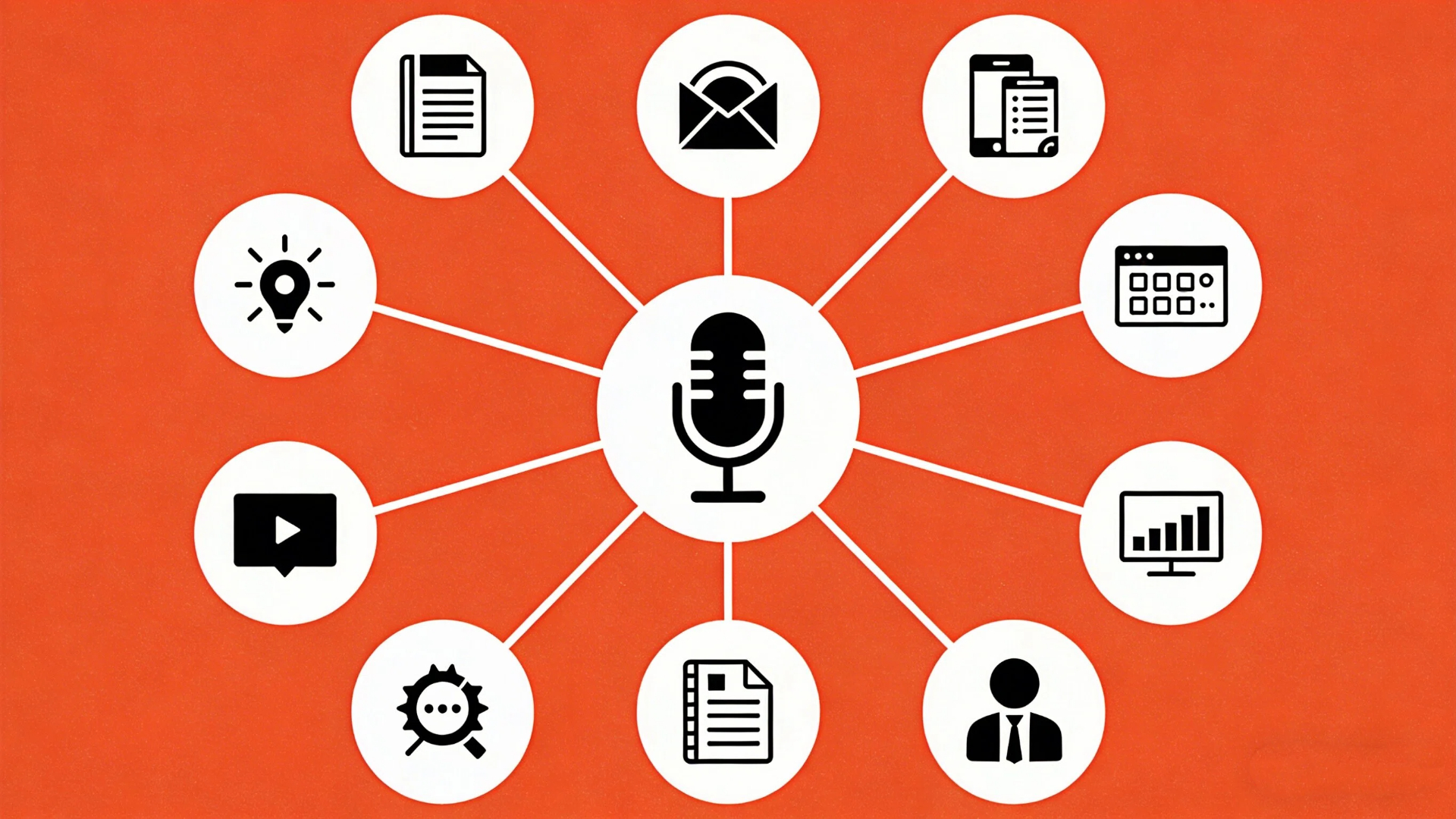
Get Ten Pieces of Content from One Episode
Don't let an episode's value end with the audio. Smart creators treat a deep episode as a content treasure chest.
- Core insights → Turn into a long blog post.
- Great quotes → Make social media graphics or short posts.
- Useful lists/data → Create an infographic or mind map.
- Interview highlights → Clip them for social media teasers.
Publish this content on different platforms. Always link back to the original episode. This pulls traffic from all over back to your podcast. It creates a content network.
Technical SEO for Podcasts
This part sounds boring. But if you do it right, everything runs smoothly. Do it wrong, and your podcast might not even get out there.
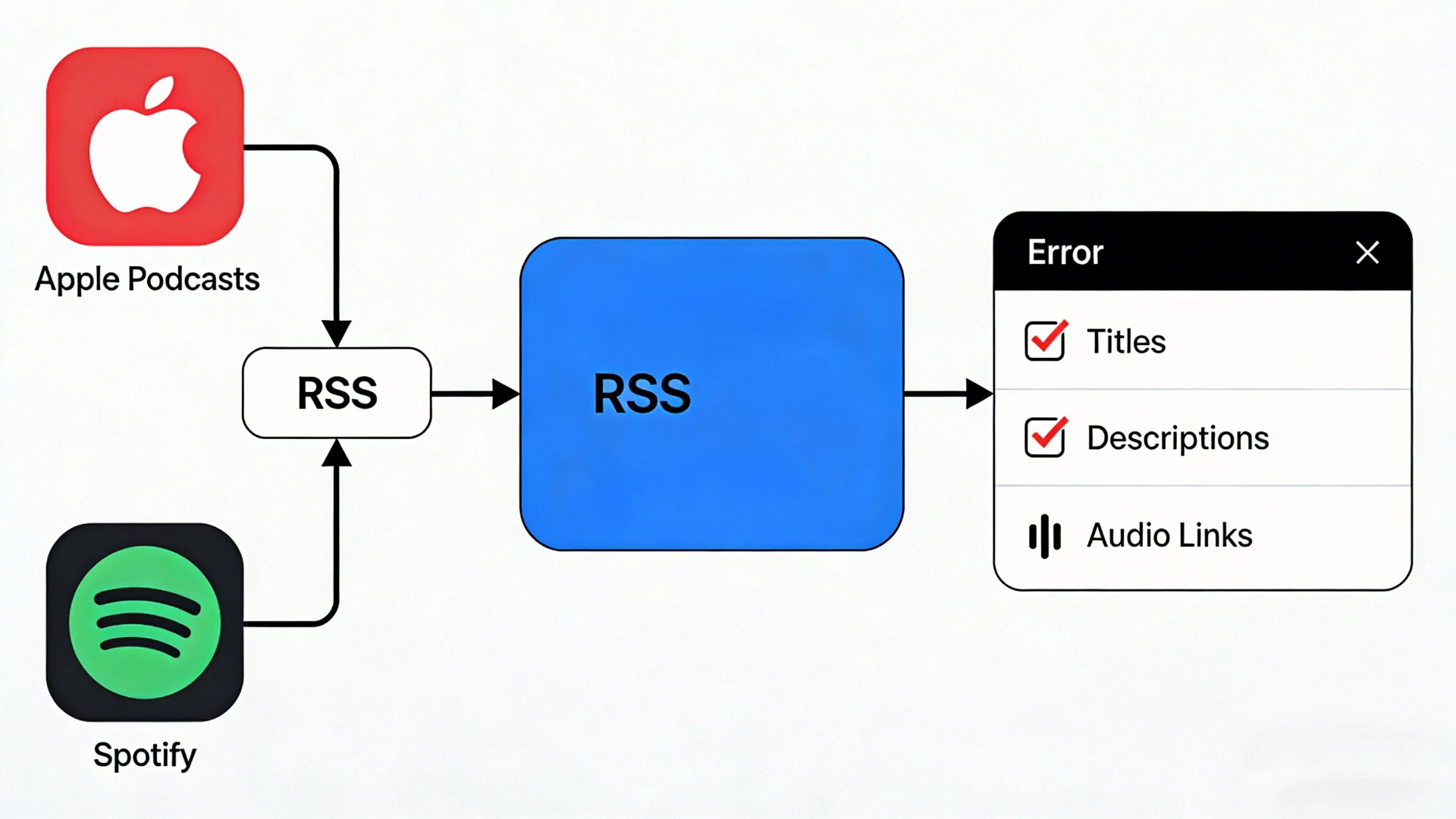
1. Check Your Podcast's "ID Card": The RSS Feed
When you upload an episode to a hosting platform, it creates an RSS feed. Apple, Spotify, and all other apps use this "address" to grab your show.
You must regularly check this RSS feed for errors. Use free tools (often from your host). Make sure titles, descriptions, and audio links are correct and complete. This is the most basic and important step.
2. Learn the "Personality" of Each Platform
Each podcast app has slightly different recommendation logic. You need to adapt.
- Apple Podcasts: Really values subscriptions and user reviews. So, remind listeners to subscribe and leave a review on Apple Podcasts.
- Spotify: Its algorithm is smart. It watches completion rate and engagement (like saves, shares). So, hook listeners fast. Make them want to listen all the way and interact.
- YouTube: Many people listen to podcasts here too. You can upload your audio with a static cover image. But the key is to add accurate subtitle files (.srt). This helps you get found in YouTube search.
3. Make Sure It Works on Phones
Most people listen to podcasts on their phones. So, if your podcast has its own website (for transcripts or merch), that site must work well on mobile. It needs to load fast, not look messy, and have easy-to-tap buttons.
- How to check: Open your site on your phone browser. Tap around. Or use the phone simulator in your browser's "Developer Tools."
- The Main Rule: Modern websites use "responsive design." This means one website automatically fits computer, tablet, and phone screens. You don't need a separate mobile site. Always design for the phone experience first. Use bigger fonts and buttons.
Advanced Tactics: Taking Your Podcast to the Next Level
Comprehensive Keyword Research
Don't just guess at keywords. You need a "treasure map" to find what your audience is really searching for.
The core idea: Keywords aren't just words. They are mirrors of listener intent. You need to find not just what they search, but why.
How to do it:
Step 1: Dig for Gold (Find Keywords)
- Start with yourself: List 5-10 core "seed keywords" for your podcast. Like "personal growth" or "career planning."
- Use tools to expand:
- General Tools: Use Google Keyword Planner or [AnswerThePublic.](Search listening tool for market, customer & content research - AnswerThePublic) Type in your seed words. See what related questions people ask.
- Podcast-Specific Tools: Use Podchaser or Listen Notes. Search for top podcasts in your field. See which words appear often in their titles/descriptions. That's your competition analysis.
- Spot trends: Use Google Trends to see what topics are rising.
Step 2: Sort the Treasure (Filter & Combine)
- Balance popularity and difficulty: Don't only target huge words like "self-improvement." Focus more on long-tail keywords like "how to beat burnout at work" or "communication tips for introverts." They have lower search volume. But the intent is clear, competition is lower, and they convert listeners better.
- Sort by intent:
- Informational (What/Why): Good for educational episode titles.
- Commercial (Brand/Show name): For building your brand.
- Navigational (Your podcast name episode #): Helps existing fans find a specific episode.
- Transactional (Buy/Course): Good for promoting your own product.
Step 3: Draw the Map (Placement & Use)
Place your chosen keywords on your content board:
- Core broad words → Use in your show name and overall description.
- Mid- to long-tail words → Use in specific episode titles, detailed descriptions, and transcript headlines.
- Question keywords → Use as an episode title, or put them at the start of your description.

Off-Page SEO for Podcasts
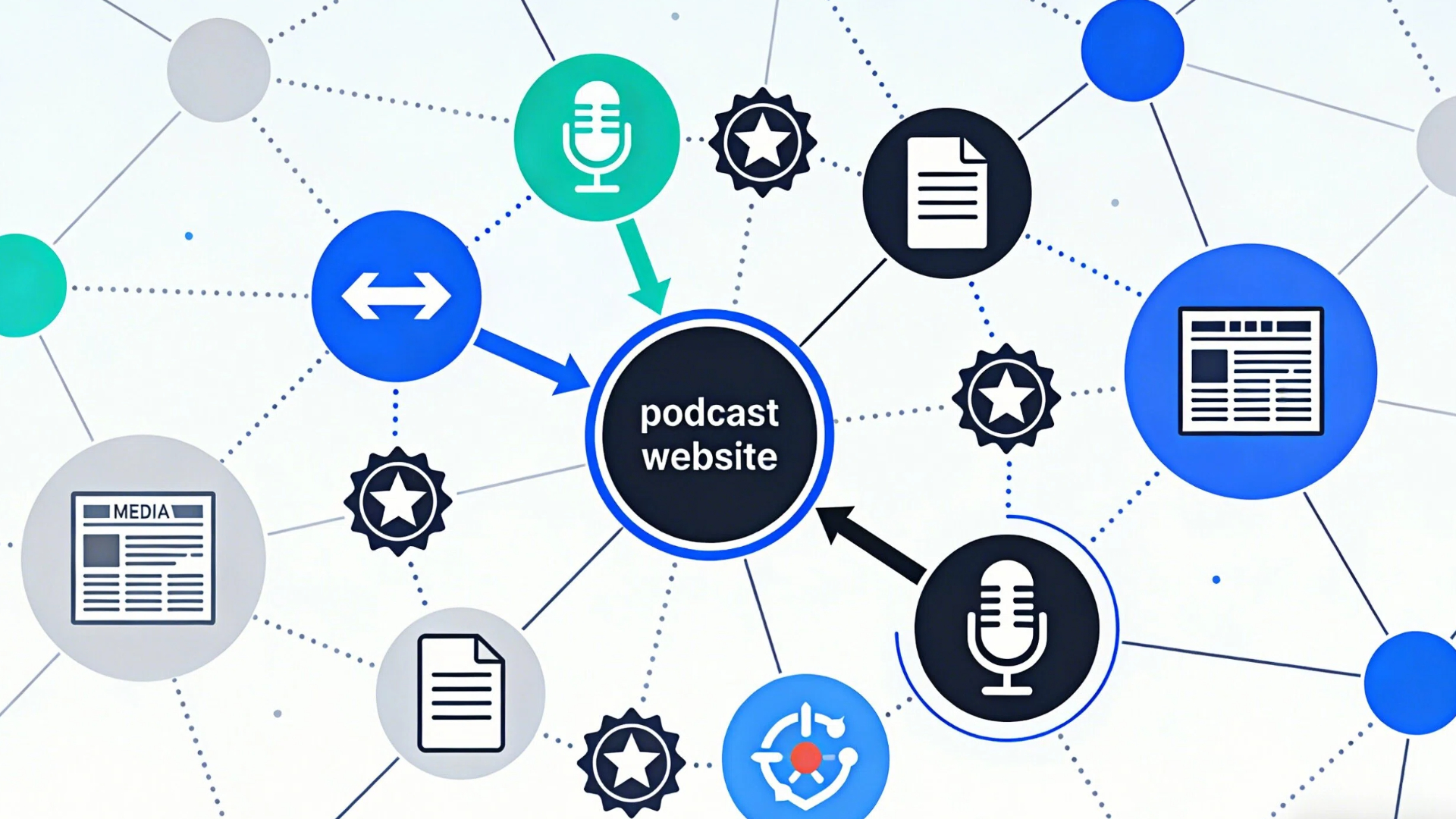
Think of your podcast website as a candidate in an election. Backlinks (links from other sites to yours) are "votes of trust." More votes, and votes from important people, make search engines trust you more. Your ranking improves.
How to get high-quality "votes"?
- Create "Vote-Worthy" Content: This is the foundation. Your full transcripts, deep summary articles, and unique data reports are perfect material for other sites to reference and link to.
- Ask for Votes (Politely):
- Guest Exchanges: Invite other podcasters or bloggers as guests. When the episode airs, both sides naturally promote and link to each other.
- Resource Page Outreach: Many sites have "industry resources" or "useful links" pages. If your podcast is high-quality, politely contact the site owner. Suggest they include your show as a resource.
- Media Coverage: If your episode tackles a news trend or has a unique view, write a press release. Or contact reporters in that field.
- Beware of "Fake Votes": Don't buy links or post in spammy forums. Low-quality links get penalized by search engines. It's not worth it.
Repurposing Podcast Content
Pros don't use an episode once and toss it. They treat a deep episode as a "content core." They split it into different formats and spread it across platforms.
Why do this?
- For SEO: You create more content about the same topic on different platforms (your site, Zhihu, Bilibili). It's like setting up more "search antennas." Your chance of being found grows a lot.
- For Users: It suits different content preferences. Some like to listen, some like to read, some like to watch.
Leveraging Data and Analytics
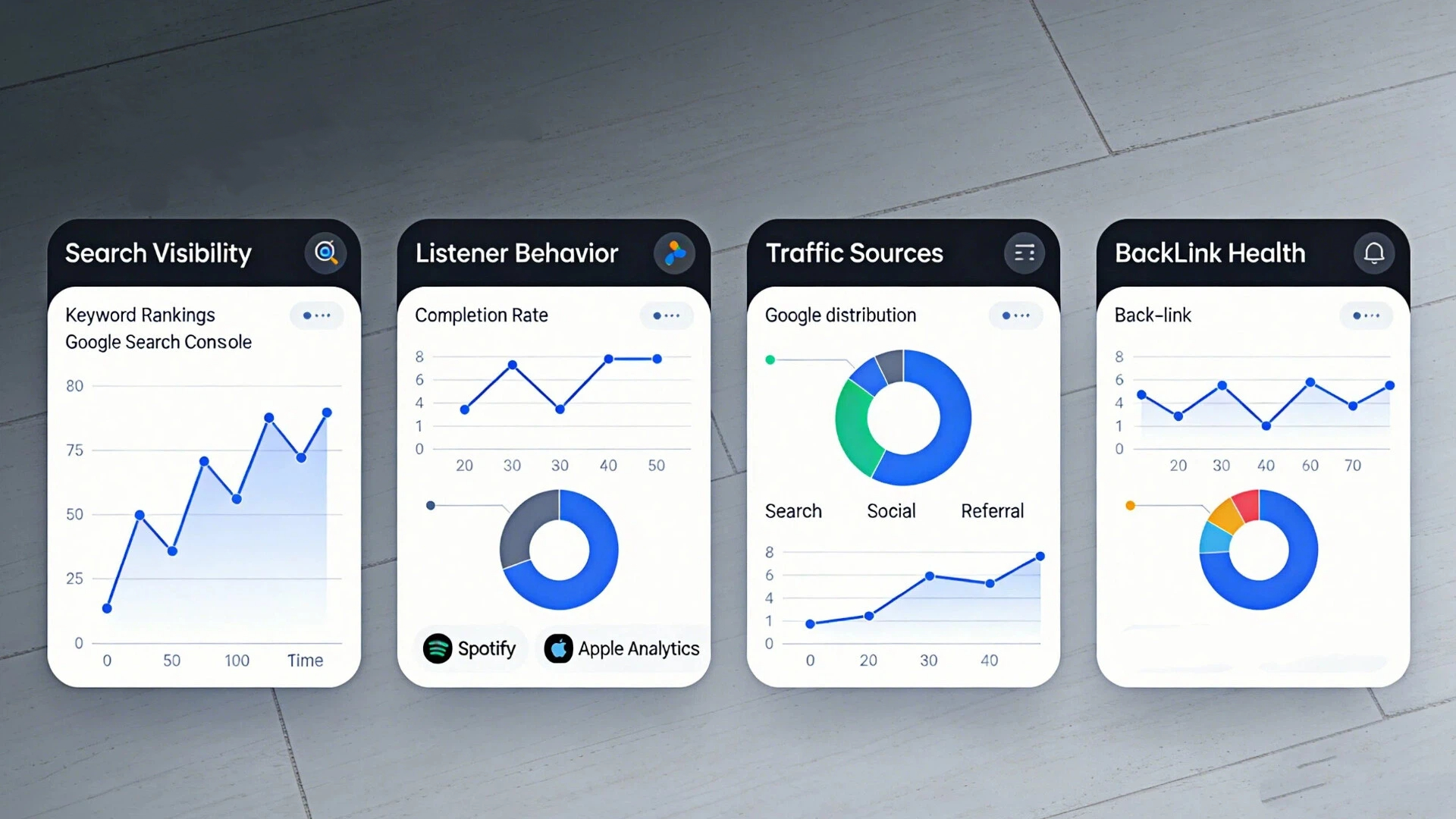
Don't decide based on feelings. Let data guide you. Watch these "dashboards":
- Search Visibility Dashboard: How are your keywords ranking? Use Google Search Console for free. See which keywords make your site appear in Google search, and which ones get clicks.
- Listener Behavior Dashboard: Where are your listeners? What do they like? Spotify for Podcasters and Apple Podcasts Connect give detailed data: location, device, listening time (completion rate). If many people quit in the first 5 minutes, rethink your intro.
- Traffic Source Dashboard: Where do new listeners come from? Use Google Analytics on your podcast website. See if traffic comes from search, social media, or other site referrals. This shows what promotion works.
- Backlink Health Dashboard: Which sites link to you? Use tools like Ahrefs or Semrush (some free features). They monitor your backlinks' number and quality. See where your "trust votes" come from.
Human-Centered SEO: Enhancing Listener Experience and Retention
Personalization in Podcast SEO
Future SEO isn't for a vague "crowd." It's for countless specific "yous."
-
Data-Driven "Personal Customization"
Big platforms like Spotify and Apple Podcasts already personalize recommendations. They use each user's listening history, time spent, skip behavior, even time of day. This means your podcast's "visibility" is different for each person. You can't please everyone. But you can analyze your backend data. Find your most loyal listener profile. For example, "urban professionals who like 20-minute career tips during their commute." Then create content consistently for them. -
Turn User Voices into Your "Recommendation"
User reviews and ratings are strong signals. Especially long, detailed comments with specific keywords. Like, "The time management method in this episode really helped me." Search engines and platform algorithms see this as high-quality, relevant content. This user-generated content is your most real, effective "keyword" and "trust vote."- What to do: Genuinely ask listeners for specific feedback. Do it at the episode end, in the description, or in your community. Ask guiding questions like, "Which tool from this episode will you try first?" Share great reviews on your website or social media. Create a positive cycle.
UX-Driven SEO Metrics for Podcasts
Search engines are smarter. They don't just look at what you write. They look at how your users "use" your content. For podcasts, the key metric has shifted from "downloads" to "listening quality."
You need to focus on these core user experience metrics:
-
Avg. Listening Time/Completion Rate
-
Skip Rate (Especially First 30s)
-
Re-listen Rate
-
Page Load Speed
-
Ease of Interaction
Community Building as an SEO Lever
A lively, loyal community is your ultimate shield against algorithm changes. It's the key to stable growth. How does a successful podcast community directly boost SEO?
- Creates High-Quality Backlinks: Superfans will naturally share and discuss your show. They'll do it on their blogs, forums, and social media with links. These links from real people in relevant communities have very high weight. No other link-building strategy compares.
- Amplifies Social Signals: Every share and discussion in your community tells the algorithm your content is "alive" and worth talking about. This boosts your content's hotness ranking on social platforms and in search.
- Creates a Keyword Goldmine: In the community, listeners talk about your show in their own words. Notice their frequent questions, vocabulary, and pain points. These are the "real keywords" you should use for future content planning and optimizing titles/descriptions.
How to start building a community?
- Start Small: Don't try to do too much. Start one listener group on WeChat or Discord.
- Get Them Active: Regularly post topics related to the latest episode. Start votes, Q&As, or story requests. Read and answer great questions from the group on your show.
- Give Them Power: Invite dedicated listeners to be "guest commentators" or help plan an episode. Turn the community from "audience" to "participants."
Bonus Section: New Trends in Podcast SEO
AI's Triple Role in Podcasts
- Your Production Helper: AI tools like AIpodify can draft scripts and even generate audio, speeding up creation and helping beginners start fast.
- The Interactive Listener: On some apps, AI lets listeners ask questions in real-time (e.g., “Explain that concept”). By providing accurate content, you help AI answer these queries.
- Your Content Multiplier: AI instantly creates transcripts, translations, and summaries. This boosts productivity and generates the text needed to improve your podcast's searchability.
Optimize for Voice Search
With the rise of voice assistants, use “Speakable Schema” markup in your text. This code tells search engines which parts of your content (like key points) are ideal to be read aloud as answers, helping your podcast be discovered by voice.
Embrace Video Podcasts
Podcasts are no longer audio-only. As YouTube is a top platform for over 70% of podcast listeners, turning your audio into a video (even with a static image) and uploading it with accurate subtitles is a crucial strategy to capture major traffic.

Conclusion
Podcast SEO is about making your podcast more visible. At its heart, you must understand platform rules. And always, always think of your listeners. Put their feelings first. Think about how they search, how they listen, and how they feel afterward. It's not just a technical task. It's a bridge to connect deeply with your audience.
Podcast SEO isn't a mechanical checklist. It's a dynamic, organic creative process. It starts with making systems "read" you. It succeeds when listeners "love" you. It ends with listeners willingly becoming your "promoters."
It's giving your show a good name and tags (metadata). It's turning spoken words into written ones (transcripts). It's making sure it plays smoothly everywhere (technical SEO). And it's making friends with your listeners, so they want to share it (community & backlinks).
Start now. Pick the easiest step for you. Let your voice be heard by more people.

How to Write Podcast Show Notes for SEO, Listener Engagement, and Growth in 2026
We invest hours in planning, recording, and editing our podcasts, yet the final step of writing show notes often leaves us stuck or exhausted. The result is that many well-produced episodes end up with only a brief description. But you may not realize that such sparse show notes are making your podcast invisible—they hide you from search engines and prevent meaningful engagement and conversions.

The Ultimate List of 60 Podcast Ideas For 2025
Beyond technical issues, the most challenging part of creating a podcast is finding inspiration. The topic you choose must not only be innovative but also align with your audience's tastes and keep up with current trends. High-quality content is a crucial element for attracting listeners. When you're unsure which field to start with, this guide provides an excellent thinking framework, allowing you to explore social hotspots, personal hobbies, and market demands to select the perfect podcast topic for you.