
How to Start and Grow a Successful Podcast in 2026: The Ultimate Actionable Guide
The number of podcasts keeps growing. It might seem like a blue ocean of opportunity, but once you start, you realize the competition is fiercer than imagined. Many shows vanish before even hitting 7 episodes. Why? People often stumble at the start. Some invest in pro gear but have no content plan. Others focus solely on production but ignore promotion. Some try to go it alone and quickly get overwhelmed by the workload. These issues show many beginners lack clear planning and systematic preparation. That's why we've created this guide. We'll walk you through the key steps to build a successful podcast.
Getting Started: The Fundamental Principles of Podcasting
Why Is Podcast So Attractive in 2026?
- Technology lowers barriers. AI tools dramatically boost editing efficiency. Deep integration of audio into car systems and smart home devices creates new listening scenarios.
- User habits have shifted. People moved from "passive receiving" to "active choosing" and "deep companionship." Podcasts offer immersive, conversational information and emotional connection. Short-form video can't easily replace that.
- Content trends are vertical and specialized. Whether it's niche hobbies, professional knowledge, or high-quality narrative documentaries, loyal audiences exist.
Types and Formats of Podcasts
Choosing the right format is often the first step to success.
Common types include:
- Solo/Monologue: Ideal for sharing deep insights or expert knowledge.
- Interview: Brings fresh perspectives and authority through guests.
- Co-hosted/Multiple Hosts: Relies on natural interaction and chemistry between hosts.
- Narrative/Storytelling: Uses refined production and strong suspense.
- Roundtable Discussion: Great for exploring diverse views, common in news commentary or hot topic analysis.
- Hybrid Formats: Many shows mix styles. For example, "solo intro + interview main segment" or "co-hosts + occasional guests" to keep content flexible.
Identifying Your Niche and Target Audience
A vague focus is a core reason many podcasts struggle to continue. Defining "who it's for" and "what it's about" is far more important than rushing to record.
Break this process into three steps:
Step 1: Scan the Market
Use data and tools, not just intuition:
- Check Google Trends for keyword popularity and patterns.
- Listen on social media to what your target users discuss, complain about, and desire.
- Study charts on Apple Podcasts and Spotify to find unsaturated niches with room to grow.
Step 2: Define Your Niche
Be specific. Ensure there are enough potential listeners whose needs aren’t fully met.
Step 3: Sketch Your Listener Avatar
Turn your target market into a specific person. Describe their:
- Demographics: Age, occupation, city, income range.
- Habits: When and where do they typically listen? What else are they interested in?
- Core Needs: Are they listening to solve a problem, find emotional resonance, or join a community?
The Podcast Blueprint: Plan Your Foundation for Success
Once you know "who it's for," the next step is deciding "what exactly to do" and "what you hope to achieve."
Defining Your Podcast Concept and Goals
Topic Selection: Find the intersection of passion, expertise, and market demand.
A topic you can stick with long-term often meets three criteria:
- You are genuinely passionate and knowledgeable about it. This prevents burnout.
- You have some expertise or a unique perspective to provide value.
- A specific audience exists, and there's a content gap (market demand).
Goal Setting: Turn vague wishes into clear signposts.
The SMART framework is a classic method for setting clear and effective goals. Use it to plan your podcast objectives:
- S - Specific: Goals should be clear, not vague.
- M - Measurable: Goals must have trackable metrics.
- A - Achievable: Goals should be challenging yet realistic within your time, resources, and abilities.
- R - Relevant: Goals must directly align with your podcast’s core vision and theme.
- T - Time-bound: Set a clear deadline for your goal.
Choosing the Perfect Podcast Format and Structure
Your show’s structure and recording style form the foundation of the listener experience. Consider both when designing your podcast.
1. Structure Design
- Length & Frequency: Match listener time and your production capacity.
- Examples: News: 15-30 mins (daily/weekly). Deep-dive interviews: 45-60 mins (weekly/bi-weekly). Academic: 90+ mins (monthly).
- Key Rule: Consistency is more important than length. Start with a schedule you can maintain (e.g., bi-weekly).
- Chapters: Adding timestamped chapters significantly improves the experience for long episodes, making navigation easy.
2. Recording Style
Choose based on your content and personal style:
- Scripted (e.g., for law, science)
- Pros: Logical, high information density, efficient to edit.
- Note: Can sound stiff if not delivered well.
- Outline-based (Impromptu) (e.g., for social topics, movie reviews)
- Pros: Conversational, authentic, often leads to unexpected great moments.
- Note: Requires strong hosting to stay on track, and may need more editing.
Branding Your Podcast
Building your podcast brand means making it recognizable at a glance and memorable at a listen. Focus on three things:
-
A Clear, Memorable Name.
Don't make it cryptic or overly clever. A good name gives a hint of the content and is easy to search and recommend verbally. -
A Sharp Cover Art.
It must be legible as a tiny phone icon. Use a simple background, enlarged show name, and clear logo. Avoid clutter. The style should match your content—clean and professional for knowledge shows, bright and illustrated for casual chats. -
An Authentic Voice.
Your voice and speaking style are your biggest assets. Don't mimic others. Be natural and clear. Design a short, consistent intro/outro music sting to create your "audio signature."
Essential Equipment and Software for All Levels
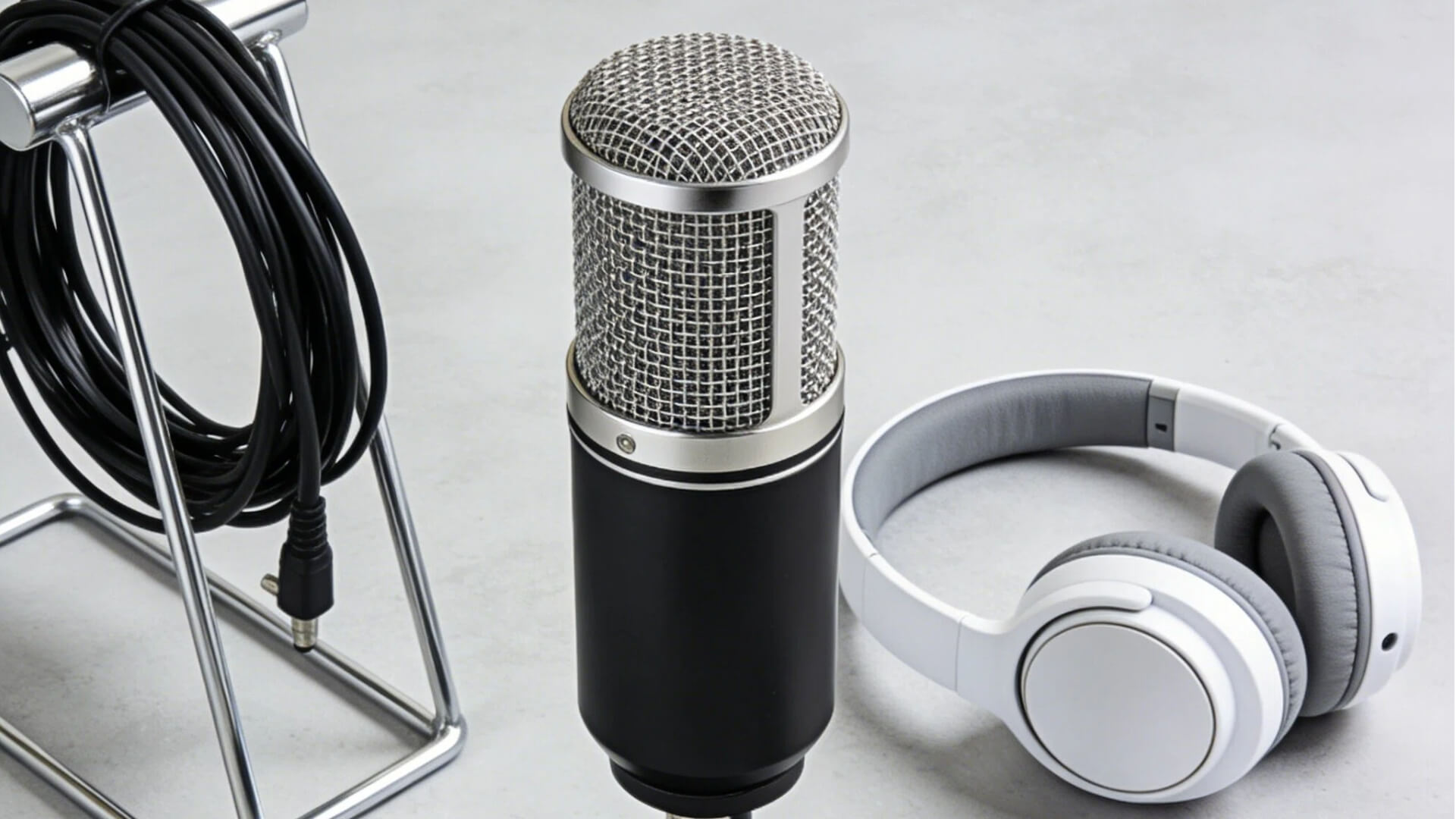
If you're just starting, don't overthink gear. The core goal is getting clear, noise-free voice audio.
- Tight Budget (Under ~$150): A USB microphone (like Fifine K669B or Blue Yeti) plus your wired earbuds will far surpass phone recording. Use free software like Audacity (PC) or GarageBand (Mac) to edit. For recording, pick a small room, hang thick blankets, and turn off appliances. Simple, effective sound dampening.
- Better Sound/Recording Multiple People (~$500+ Budget): Upgrade to an XLR microphone (like Audio-Technica AT2020) paired with an audio interface (like Focusrite Scarlett Solo). For remote guest recording, use a service like Zencastr. It records each participant's audio locally for clear, independent tracks.
Software is key for efficiency.
- Free & Solid: Audacity is fully featured for cutting, noise reduction, and exporting.
- Game-Changing Efficiency: Try Descript. It transcribes audio to text, letting you edit by editing the text. Revolutionary.
- Professional Workflow: Adobe Audition is the industry standard, powerful for multi-track editing and sound processing.
- One Key Tip: No matter the software, always apply noise reduction and compression. It instantly makes your voice sound more professional.
If you want more details, click here: What Equipment Is Needed for a Podcast? A Complete Beginner’s Guid
Recording and Editing: Best Practices
Preparing for Recording: Script Writing
True "fluent and natural" delivery almost always comes from careful preparation. Good prep shows respect for both your listeners and yourself.
How to prepare? The core is creating a script/outline.
A word-for-word script isn't mandatory, but a detailed outline is essential:
- Opening Hook: Explain "why this episode is worth listening to" in 30 seconds.
- Core Segments: Break content into 3-5 modules. Note keywords, stories, or examples for each.
- Transition Design: Write a couple of casual, bridging sentences between modules.
- Ending & Call-to-Action: Summarize key takeaways. Clearly tell listeners what to do next (e.g., ponder a question, check a link in the description).
Of course, if you lack inspiration or are a total beginner unsure where to start, you can try AI to help create a script outline. AIpodify can generate podcast scripts for you. It can even produce podcast audio from a script in chosen voices. It's simple to use and helps you painlessly get past the initial hurdle!
Recording Techniques
Good recording boils down to two things: positioning correctly and isolating noise.
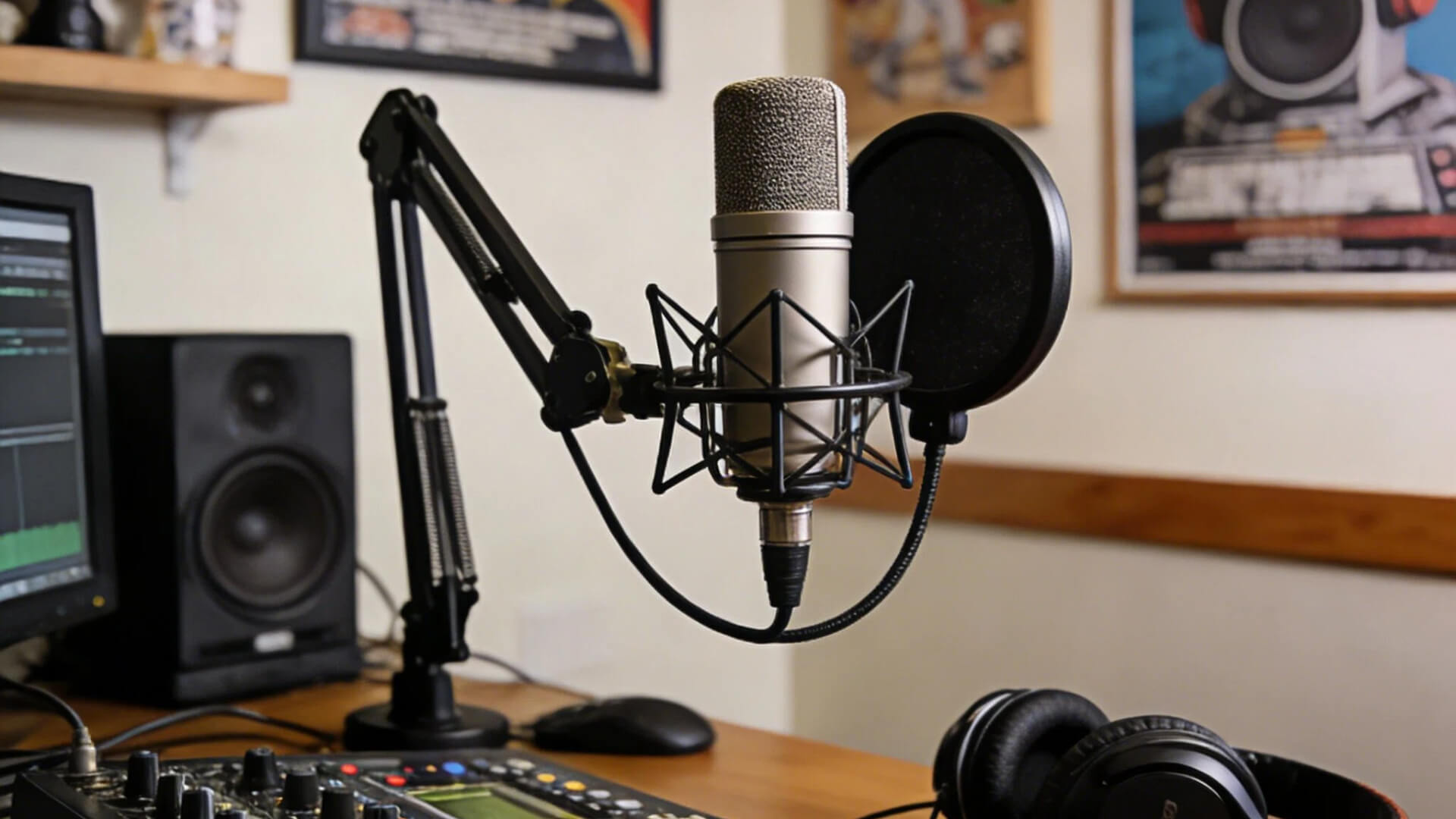
1. Microphone Placement
- Distance: About a fist's width (15 cm) from your mouth.
- Angle: Position it slightly off-axis (not directly in front of your mouth) to minimize plosive ("pops") sounds.
2. Minimize Environmental Noise
- Turn off all noise-makers (AC, fans, phone notifications).
- Hang a thick blanket or puffer jacket behind you to absorb echoes.
- Use software (like Audacity's "Noise Reduction") later to clean up any remaining noise.
Ensuring Quality for Remote Interviews
- Use Dedicated Tools: Services like Zencastr or Riverside.fm are best. They record high-quality local audio from each participant, unaffected by internet call quality.
- Always Have a Backup: Ask your guest to record a backup locally on their phone (using the Voice Memos app). This is your safety net if the primary recording fails.
Simply put: Position well, keep quiet, use the right tools, and always backup. This gets you clear, professional-enough sound.
Editing Your Podcast
The core of editing is enhancing content clarity and the listening experience. A standard workflow significantly boosts efficiency.
The Core Four-Step Editing Process:
-
Rough Cut (Organize Content)
Remove mistakes, long pauses, and obvious tangents. Keep the core content tight. -
Polish (Optimize Sound)
- Noise Reduction: Remove background hiss/rumble. Be careful not to overdo it and distort the voice.
- Equalization (EQ): Gently reduce lows (to lessen muddiness) and slightly boost mids/highs (for clarity).
- Compression: Use a "voice" preset to even out volume, preventing loud and quiet jumps.
-
Add Polish (Enhance the Experience)
- Add intro/outro music that fits your style. Keep volume lower than the voice, with smooth fade-ins/outs.
- Use brief transition sounds between segments if helpful.
- Find music/sound effects on Epidemic Sound, Artlist, or the YouTube Audio Library.
-
Normalize & Export (Finalize for Release)
- Use "Loudness Normalization" to set the overall volume to the podcast standard (around -16 LUFS).
- Export as a stereo MP3 file. A bitrate of 128-192 kbps is sufficient.
Avoid background music that overpowers the voice, don't overuse sound effects, and ensure consistent volume throughout. Good editing feels seamless, letting listeners focus on the content.
Still confused? Click here to learn more: Everything You Need To Know About How to Edit A Podcast
Master the Feed: Podcast Hosting & Multi-Platform Distribution
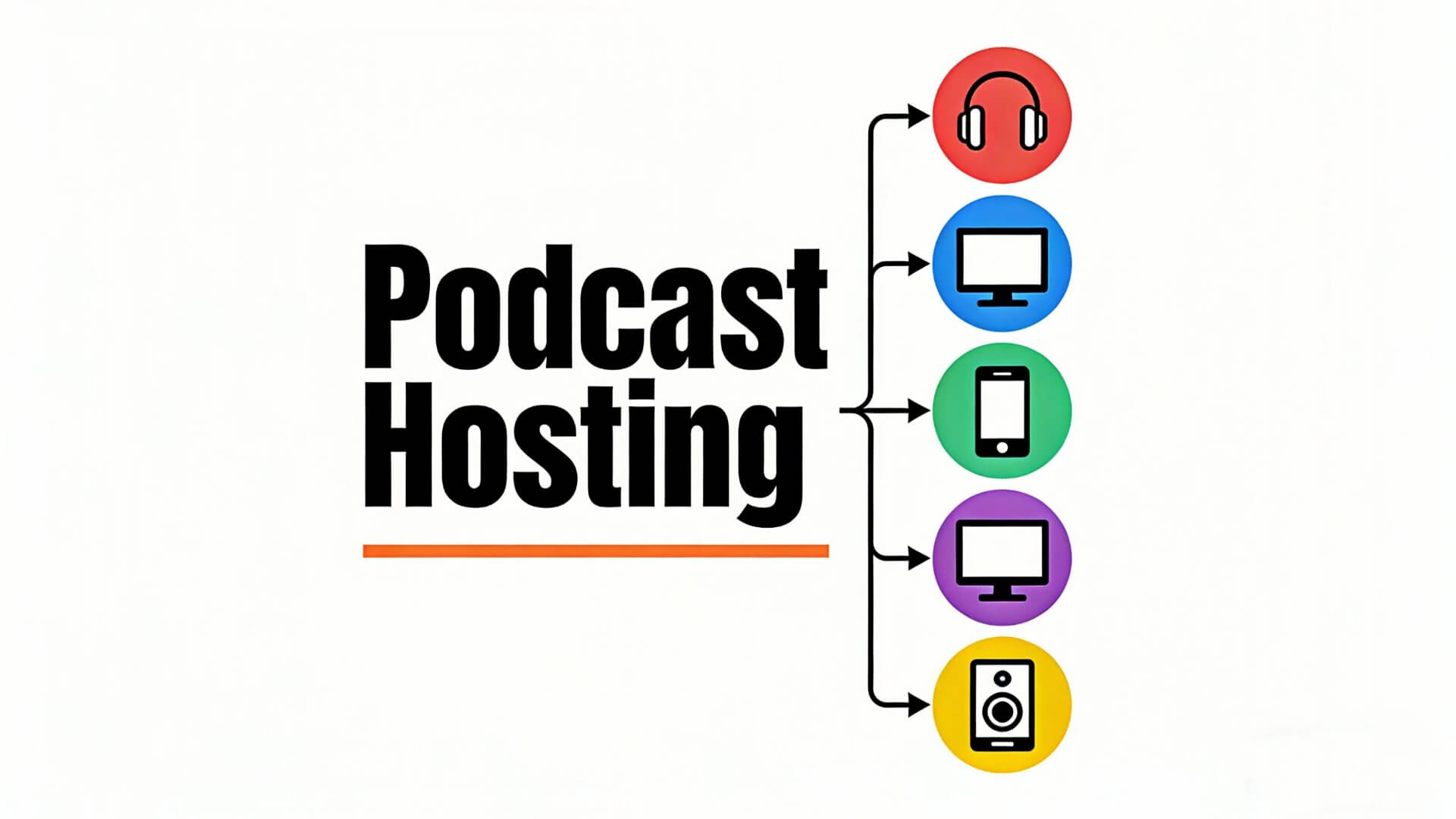
Selecting Podcast Hosting Platforms
Mainstream hosting platforms include:
| Platform | Core Advantage | Price Reference (Monthly) | Data Analytics | Ideal For |
|---|---|---|---|---|
| Anchor | Completely free, owned by Spotify; super simple, includes recording and monetization tools. | Free | Basic (via Spotify dashboard) | Absolute beginners wanting zero-cost start and utmost simplicity. |
| Buzzsprout | Best user experience, intuitive interface; offers directory optimization tips; built-in chapter maker. | ~$12+ | Detailed, visual, includes engagement metrics. | Creators who value ease-of-use and want to minimize technical headaches. |
| Libsyn | Industry veteran, most reliable; powerful features, high customizability (custom websites). | ~$5+ | Professional, in-depth. | Serious, professional creators, or those planning long-term/brand growth. |
| Podbean | Comprehensive all-in-one platform with hosting, website, monetization, and recording tools. | ~$9+ | Comprehensive. | Creators who want to solve everything in one place. |
Distributing Your Podcast
Multi-platform distribution is essential for visibility. These three major platforms are must-haves.
- Apple Podcasts: The industry benchmark. Essential.
- Process: Use Podcasts Connect. Log in with your Apple ID and submit your RSS Feed link.
- Key: Ensure your cover art dimensions, categories, etc., meet all requirements, or it will be rejected. Here's Apple's detailed guide.
- Spotify for Podcasters: Massive user base, especially younger audiences.
- Process: Submit your RSS Feed via the Spotify for Podcasters platform. Review is usually quick.
- Advantage: Offers relatively rich backend insights. You can also create video podcasts or interactive content directly within Spotify.
- YouTube: An indispensable visual frontier.
- Strategy: Don't just upload a static image. Create simple audiogram videos (use tools like Headliner to combine audio, waveform, subtitles, and quotes) or record a video version.
- Value: Reaches YouTube's massive user base and leverages its powerful search and recommendation algorithms.
Marketing and Growing Your Podcast Audience
Your show is well-produced and live. Now comes the real challenge: How do you get discovered? How do you systematically grow your audience?
Designing a Launch Strategy
- Multi-Episode Launch (e.g., 3 episodes at once) quickly showcases depth, enticing listeners to binge. Good for narrative shows.
- Single-Episode Launch is lower pressure and helps establish a weekly habit.
A hybrid strategy is often recommended: Launch with 2-3 episodes in the first week (including a trailer + full episodes), then immediately switch to a fixed schedule (e.g., every Wednesday).
Consistency is king. It builds listener expectation. Always pre-launch: Release teaser clips, share behind-the-scenes on social media a week before, and clearly tell people how/where to subscribe.
SEO and Metadata Optimization
Optimizing titles and descriptions helps your podcast rank better in platform searches.
- Title: Be direct and include relevant keywords.
- Description: The first two lines are vital. Clearly state the value and naturally weave in keywords.
- Show Notes: Use them! Include links, books mentioned, and add timestamps/chapters for long episodes. This greatly enhances user experience and SEO.
- Tags & Categories: Fill these out carefully in your host dashboard. They significantly aid discovery.
Social Media and Community Building
Social media isn't just link-dropping. It's about "translating" your audio into formats that work on each platform.
- Instagram: Share quote graphics or short video previews.
- TikTok/Douyin: Post the most engaging 60-second clips with music.
- Twitter/X: Start topic discussions.
- LinkedIn: Share professional insights.
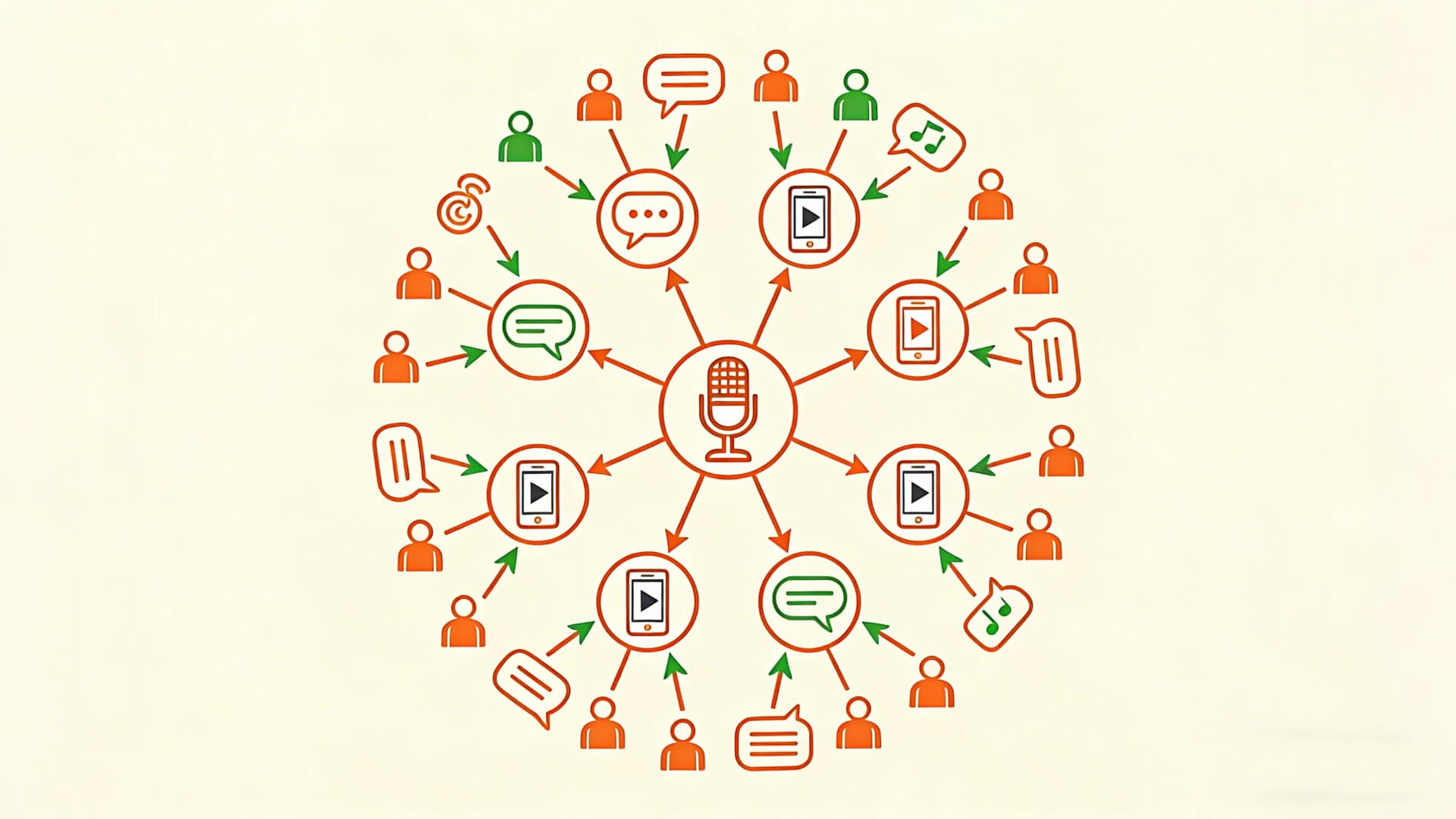
Core: Engage consistently. Reply to comments, answer listener questions on air. Consider building a WeChat group or email list for exclusive updates. This turns casual listeners into loyal fans.
Collaboration and Networking
Collaboration is the fastest way to expand your reach.
- Guest Invites: Send a personalized email explaining why they're the perfect guest. Be specific.
- Podcast Swaps: Find shows with similar audiences but non-competing content. Agree to cross-promote for a win-win.
- Content Repurposing: Turn episode content into articles and pitch them to relevant influencers or media.
All collaboration is based on mutual benefit. Always think about the value you provide to your partner.
Multiple Streams of Podcast Income: A Practical Guide
Once you have a stable listener base, you can consider monetization. Earning revenue isn't just about money; it's a measure of your show's value. Core principle: Prioritize listener experience and provide genuine value.
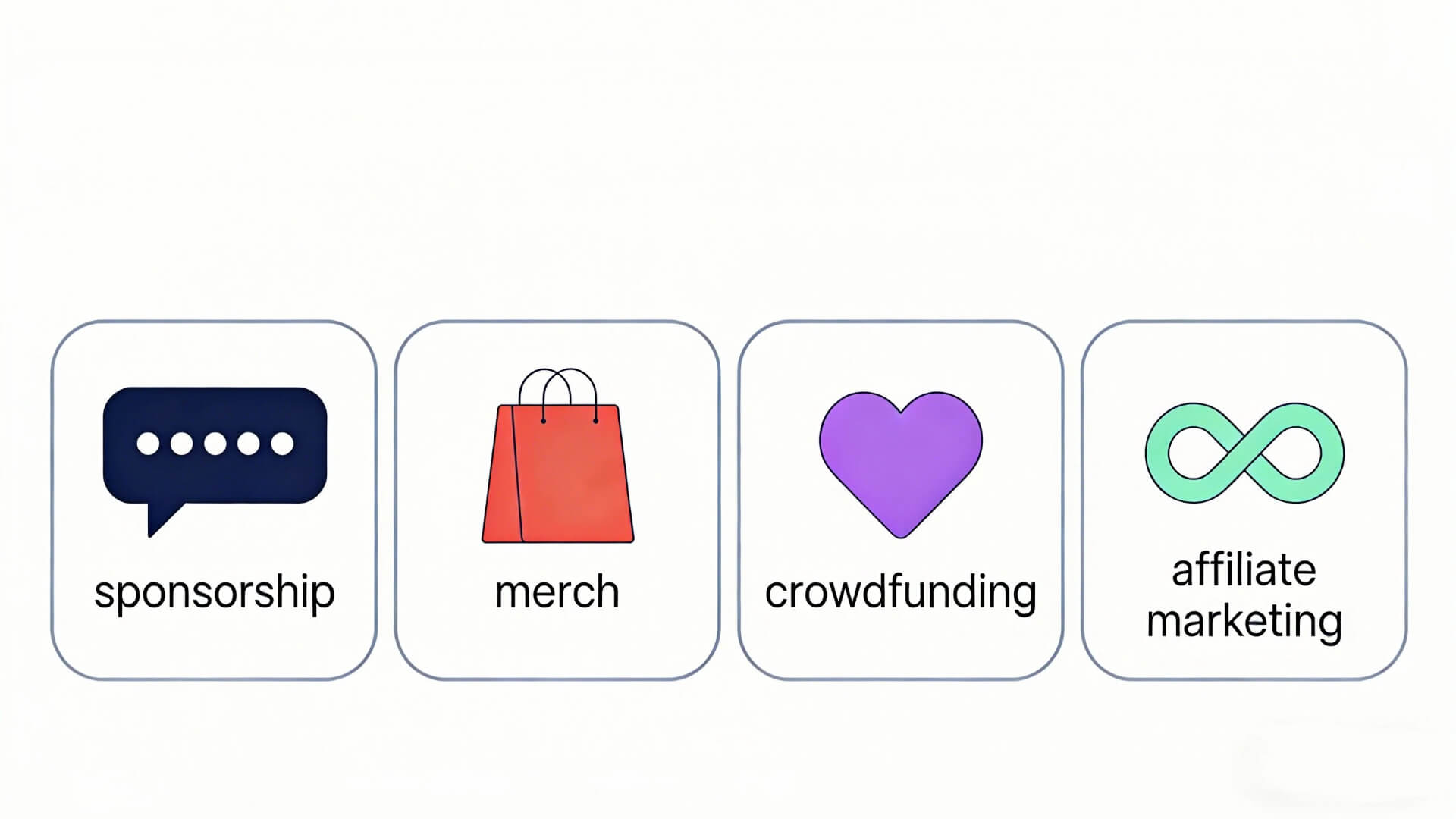
Sponsorships and Advertising
Ads are the most common route. The key is to "recommend," not just "read."
- Find the Right Fit: Start with brands related to your niche that you actually use. Your sincerity comes through.
- Integrate Naturally: Turn the ad into a useful tip. Share how you personally use the product/service.
- Offer Value: Secure an exclusive discount code for your listeners. It's a win-win.
Listener Support and Crowdfunding
Support from your most dedicated listeners is often the steadiest income.
- Set Up Channels: Use platforms like Patreon or Ko-fi to make supporting easy.
- Provide Unique Value: Offer supporters ad-free episodes, behind-the-scenes content, exclusive livestreams, or community access. Make them feel like "insiders."
- Mindset Shift: Frame it as "enabling support" for your work, not "asking for donations." You provide value; they choose to support that value.
Selling Products and Services
If you have your own products (courses, consulting, books), your podcast is the best showcase.
- Content as Marketing: Deeply share your expertise on the show. Demonstrate your knowledge. Listeners who find it helpful will be interested in your paid offerings.
- Gentle Guidance: Provide a natural next step at the end or in the show notes. E.g., "For a more detailed guide on today's topic, check the link in the description."
- Avoid Hard Sells: Trust takes time to build. One pushy sales pitch can destroy it.
Don't rush to monetize before your content is solid. When your podcast genuinely helps people, revenue will follow naturally, allowing you to keep doing it better and longer.
More ways to monetize? There is a guidance for you: Ultimate Guide: How To Monetize Podcast Step By Step
Analytics and Continuous Improvement
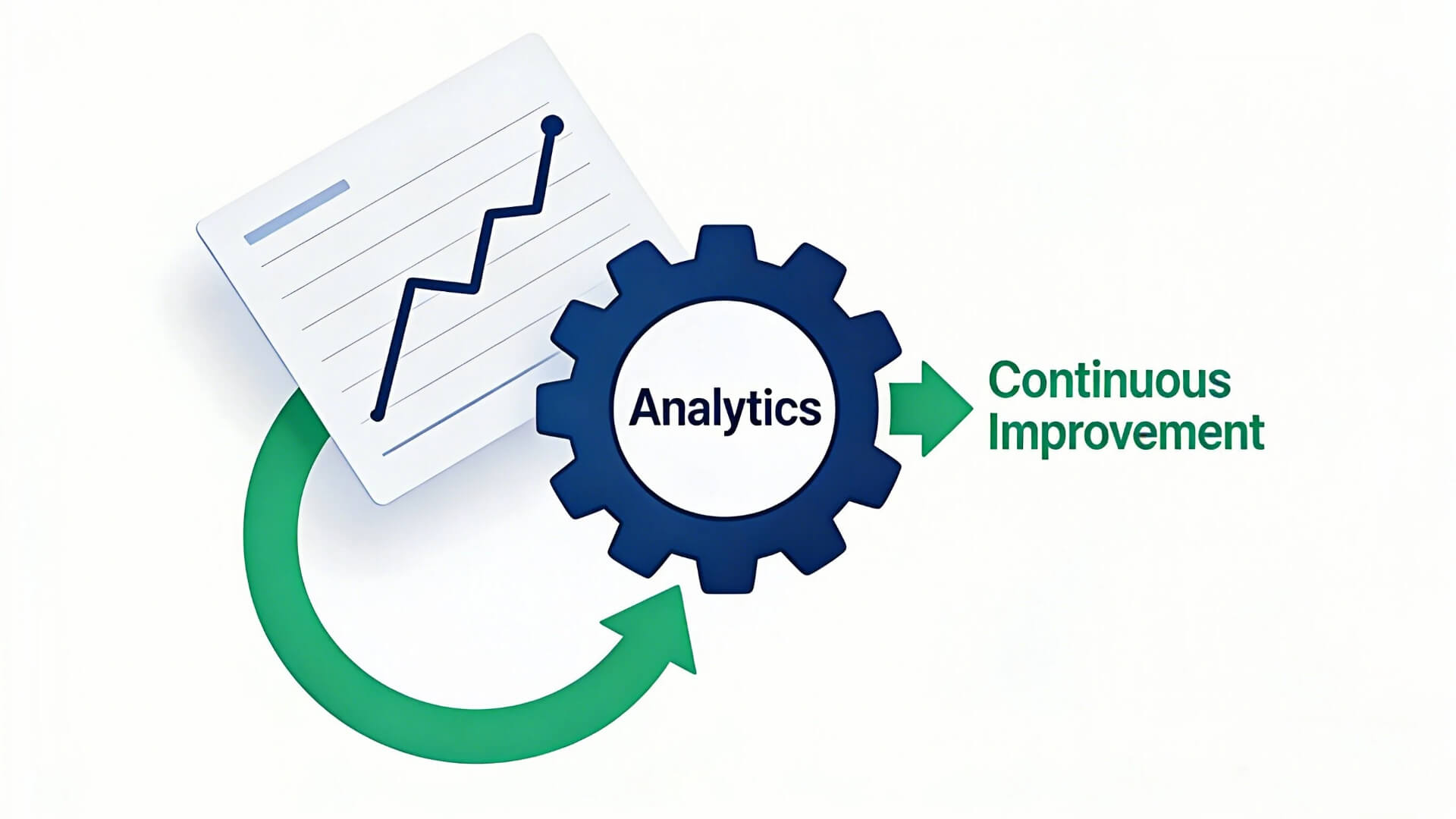
After some time, you'll wonder: How many people are listening? Do they like it? What's next? Data and analysis are your best navigators.
Tracking Key Metrics
Don't get overwhelmed. Focus on these:
- Downloads: The basic metric for overall reach. But don't just watch the total. Observe the first 72-hour trend after each episode drops. It shows listener anticipation and your promotion effectiveness.
- Listener Retention (or Completion Rate): More important than downloads. It shows the average percentage of each episode listeners actually hear. If many drop off early, improve your intro. A mid-episode dip might mean pacing issues or a poorly placed ad.
- Engagement: Comments, ratings, shares. These are votes cast by action, far more valuable than a silent download. One thoughtful comment is worth more than a hundred silent downloads.
- Conversion Rate: If you have a call-to-action (e.g., visit a website, use a code), track how many listeners act. This directly measures your content's persuasiveness.
Using Feedback to Improve Content
Data tells you what is happening; feedback tells you why. Actively seek feedback. Don't fear criticism.
- How to Collect:
- Direct Ask: End episodes with, "What did you think? Let me know in the comments!"
- Dedicated Segment: Have a "Listener Mail" segment where you read and answer questions.
- Polls: Use social media polls to let listeners vote on future topics.
- Surveys: Use simple tools (like Google Forms) for occasional feedback on content preferences and suggested improvements.
Staying Updated on Industry Trends
The podcast industry evolves quickly. Staying informed helps you seize new opportunities.
Key Trends & Tech for 2026:
-
Video Podcasting: Now a "must-have," not a "nice-to-have." Platforms like YouTube and Spotify heavily promote it. You don't need a fancy studio; good framing and audio recording the conversation adds immense immersion and provides shareable video clips.
-
Interactive Features & Tech:
- Chapters: Using timestamped chapters is now standard for professional shows. It lets listeners skip around easily.
- Interactive Polls/Live Captions: Some platforms and tools are adding these, improving accessibility and engagement.
-
AI Assistance: AI is becoming highly practical for transcription, writing show notes, and generating summaries. It frees you from tedious tasks so you can focus on creativity.
For example, you can use AIpodify to draft scripts and even generate audio, making the process much easier!
Conclusion
To wrap up, here are the three most important things: First, starting is a hundred times more important than being perfect. Record your first episode with the simplest gear. Set a schedule you can maintain. Consistency will outlast most competitors. Second, quality builds trust.. Ensure clean audio, sincere delivery, and prepared content. Listeners feel the effort. Third, always remember you're creating for a specific person. Before choosing a topic, editing, or interacting, ask: "Is this useful to him/her?" If you stick to this, the listeners who are truly meant for you will find you, appreciate you, and support you on the journey ahead. Now, go start your podcast!


The Ultimate Guide on How to Grow Your Podcast Audience
Does this sound familiar? You spend days prepping, recording, and editing your latest episode. You finally hit "publish" and sit back, waiting for the numbers to climb. But four weeks later? You’re still staring at a download count that barely hits double digits.
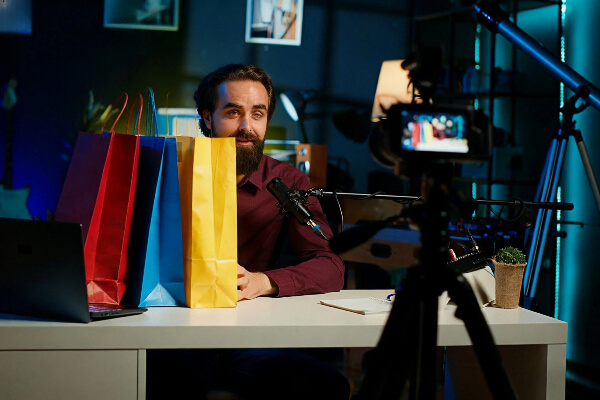
Podcast Sponsors 2025: How To Get Them Fast – Proven Strategies To Monetize
Sure, passion fuels your podcast—but how far can "just for the love of it" really take you? What if you could turn that passion into profit—getting paid for what you’re already great at, while your audience keeps cheering you on? Sounds motivating, right?