
How to Cite a Podcast Correctly to Build Trust (From APA/MLA Styles to Social Media Sharing)
You hear a brilliant quote on a podcast. How do you credit it? Do you just drop a link? Do you need a formal bibliography?
It gets confusing quickly, but getting it wrong has consequences.
I learned this the hard way. I once referenced a statistic without a clear source, and a listener immediately called me out for "spreading misinformation." It was embarrassing, but it taught me a valuable lesson: receipts matter.
In this guide, we cover the formal styles (APA, MLA) for credibility, and the practical tactics for show notes and social media. Here is exactly how to give credit without the headache.
Why Is Citing Sources Important for Podcasters?

I know what you’re thinking. Citations feel like boring schoolwork. But for a podcaster, they are actually a superpower.
Here is why you should care.
Avoid Plagiarism and Stay Safe
No one wants to be called a thief. If you use someone else's idea without credit, that is plagiarism. It can get your content taken down or ruin your reputation. Citing your sources keeps you legal and safe.
Build Authority
Trust is everything in this game. When you cite sources, you tell your listeners, "I did my homework." You aren't just making things up. This proves you are a pro who values the truth.
The Networking Bonus
This is the secret weapon most beginners miss. Hosts love being mentioned. When you credit them, they notice you. They might even share your work with their audience. It’s the easiest way to make friends in the industry.
Now that we know why we do it, let's look at what you need. Before you write anything down, you have to hunt for six specific details.
What Information Do You Need to Cite a Podcast?
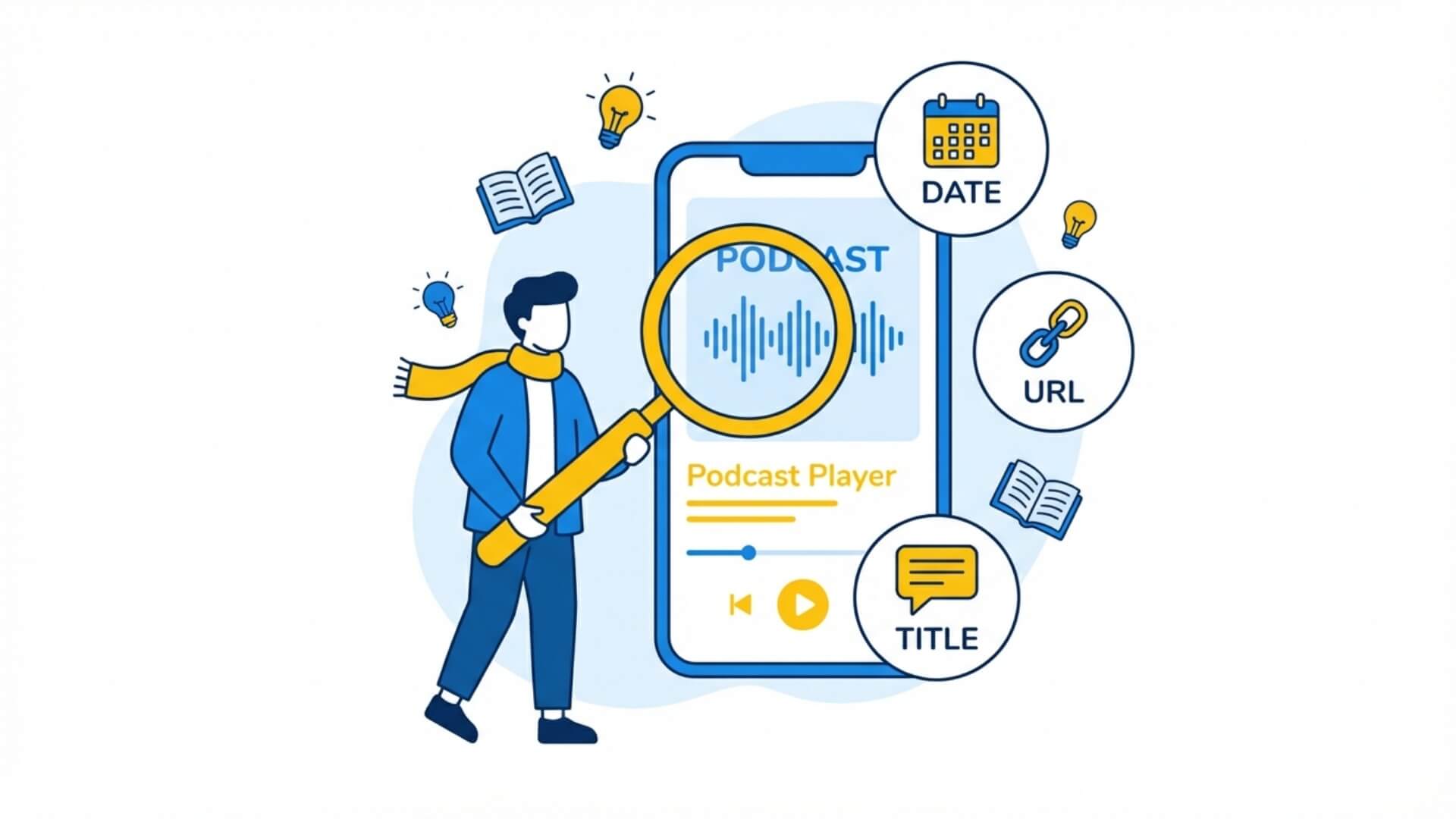
Before you worry about where the commas go, you need to gather your data. Think of this like gathering ingredients before you start cooking.
You can usually find all of these on the podcast’s website or in your listening app (like Apple Podcasts or Spotify).
Make sure you write these down:
- Host’s Name: This is the main person speaking. If there is no specific host, look for the Executive Producer.
- Podcast Title: The name of the show itself (e.g., The Daily).
- Episode Title: The specific name of that single recording.
- Date Published: The day the episode was uploaded or aired.
- The URL: The direct web link to the episode.
- Production Company: Who made it? This could be a network like NPR or just the creator's name.
Once you have this list, you are ready to write. Let's start with the most common place you will use this: your own show notes.
How to Cite a Podcast in Your Show Notes (The "Link" Method)
If you are writing show notes for your website or a podcast app, forget the strict academic rules for a minute. Your goal here is usability. You want your listener to click and listen.
Use these two digital best practices.
The Hyperlink Rule
Do not paste a long, ugly URL. It looks messy, takes up space, and scares people off.
When I first launched my show, I used to paste raw URLs into the description. I checked my analytics and realized: nobody clicked them. They were too ugly and intimidating on a phone screen. As soon as I switched to clean hyperlinks, my click-through rate doubled.
- Bad: Listen to the episode here: https://www.website.com/episode-123-xyz
- Good: Listen to the episode [here].
Link the text directly. It looks cleaner and invites a click.
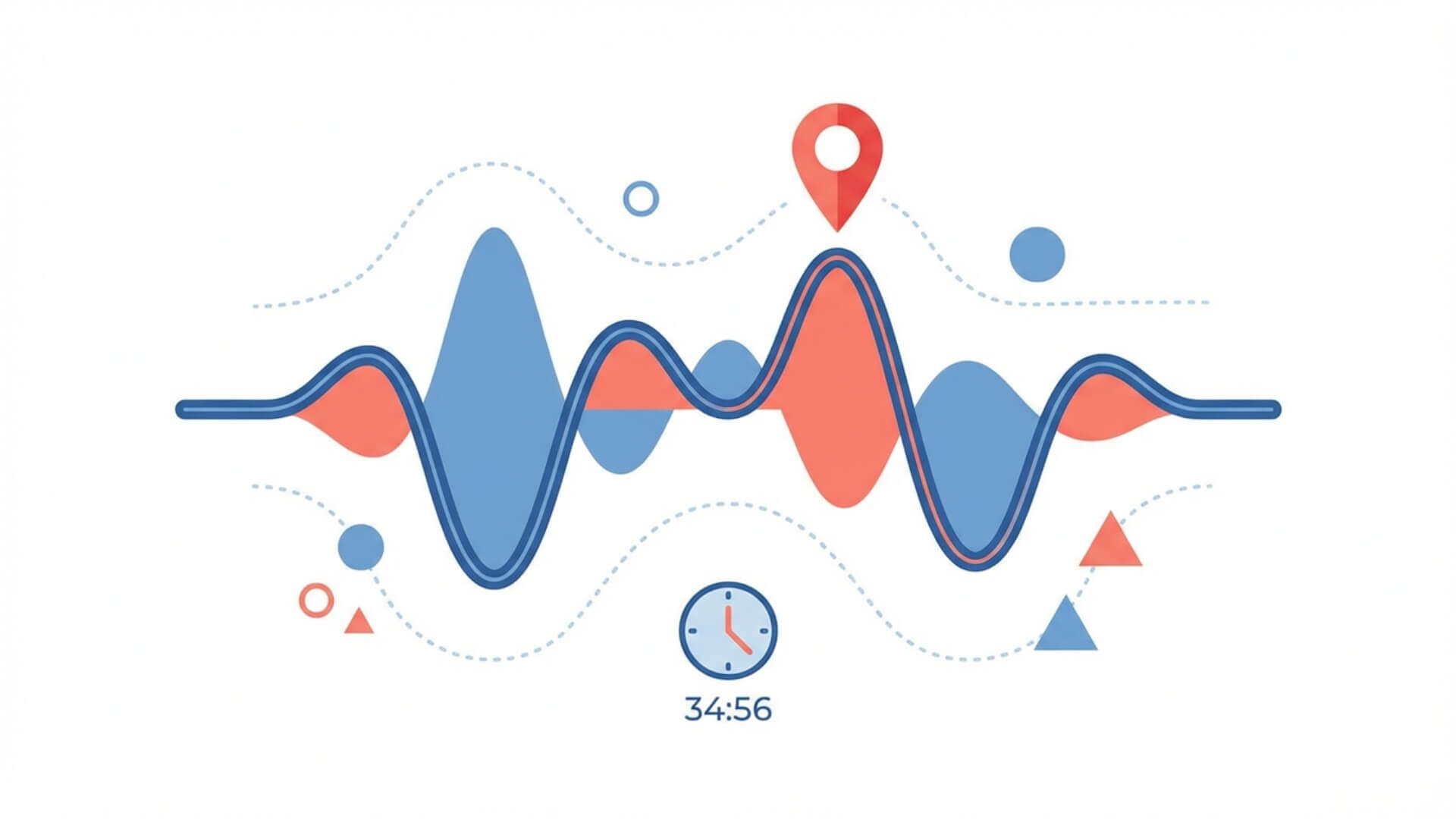
The Timestamp Trick
Podcasts are long. If you talk about a specific quote from a 60-minute interview, don't make your listener hunt for it. Give them a map.
Add the "time code" (the minute and second) in parentheses.
- Example: "We discuss the new marketing trends (starts at 14:20)."
This respects your audience's time. They will love you for it.
This method is perfect for the web. But sometimes, you need to be formal. Maybe you are writing a research paper or a guest post for a strict publication.
In that case, you likely need APA style. Let’s break that down.
How to Cite a Podcast in APA Style (7th Edition)
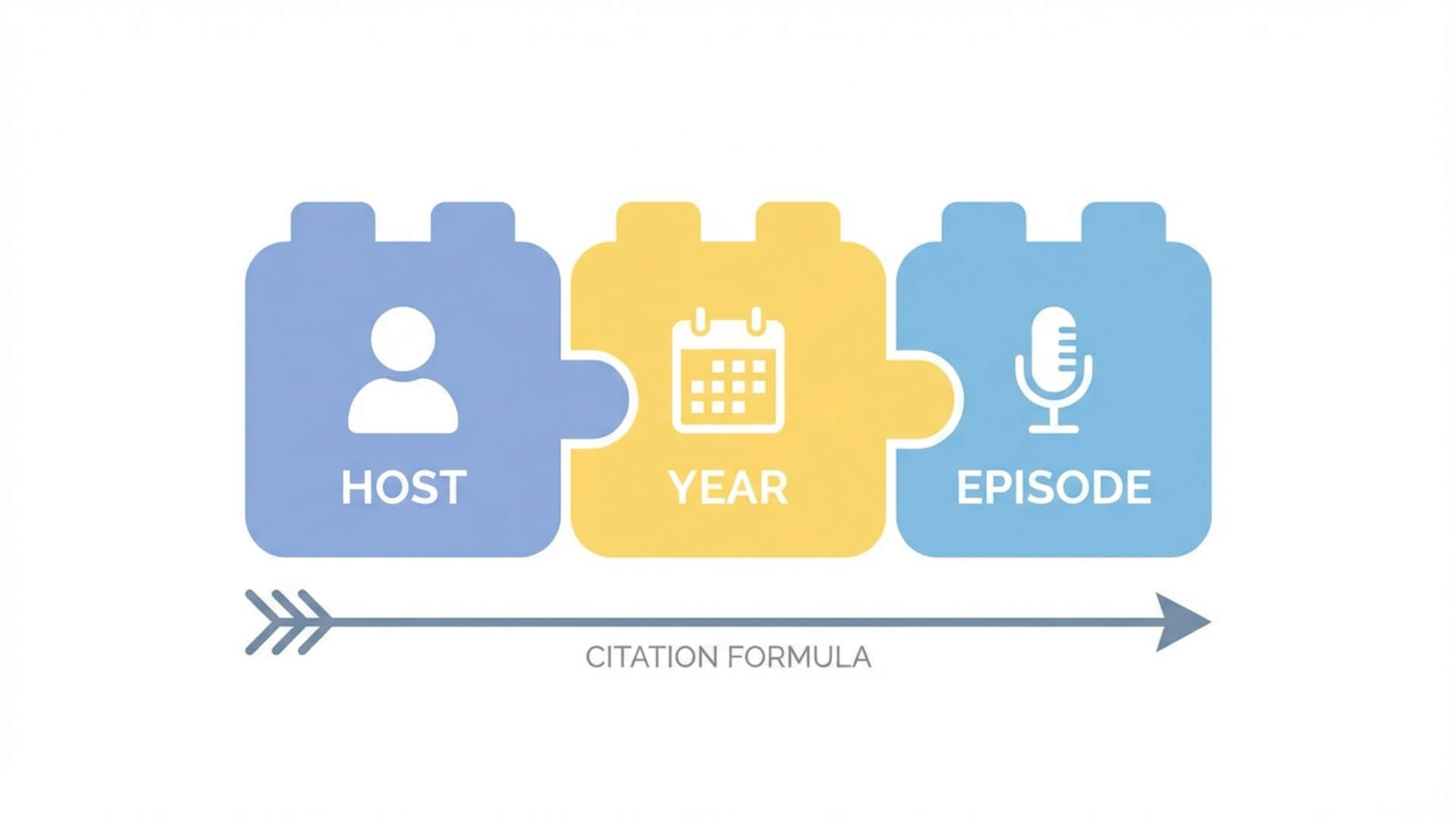
APA is the standard style for education and social sciences. If you are writing a paper for a psychology class or a business journal, this is likely the one you need.
The Golden Rule: In APA, italicize the Podcast Name. Do not italicize the episode title.
Referencing a Specific Episode
This is the most common format you will use. Treat the Host as the author.
The Formula:
Host Last Name, Initials. (Host). (Year, Month Day). Episode title [Audio podcast episode]. In Podcast Name. Production Company. URL.
The Example:
Barbaro, M. (Host). (2022, March 8). The War in Ukraine [Audio podcast episode]. In The Daily. The New York Times. https://...
Referencing a Whole Series
Sometimes you aren't pointing to one specific recording. You want to reference the whole show over a span of time.
The Formula:
Host Last Name, Initials. (Host). (Start Year–End Year). Podcast Name [Audio podcast]. Production Company. URL.
The Example:
Glass, I. (Host). (1995–Present). This American Life [Audio podcast]. WBEZ Chicago. https://...
How to Handle In-Text Citations
When you are writing the actual sentences of your paper, you don't use the full URL. You keep it brief in parentheses. If you are quoting audio, add the specific timestamp.
The Formula:
(Host Last Name, Year, Timestamp)
The Example:
The host argues that coffee is crucial for creativity (Glass, 2021, 14:02).
That covers the scientists and business majors. But what if you are writing for the arts or humanities? You’ll need a different stylebook. Let's look at MLA.
How to Cite a Podcast in MLA Style (9th Edition)
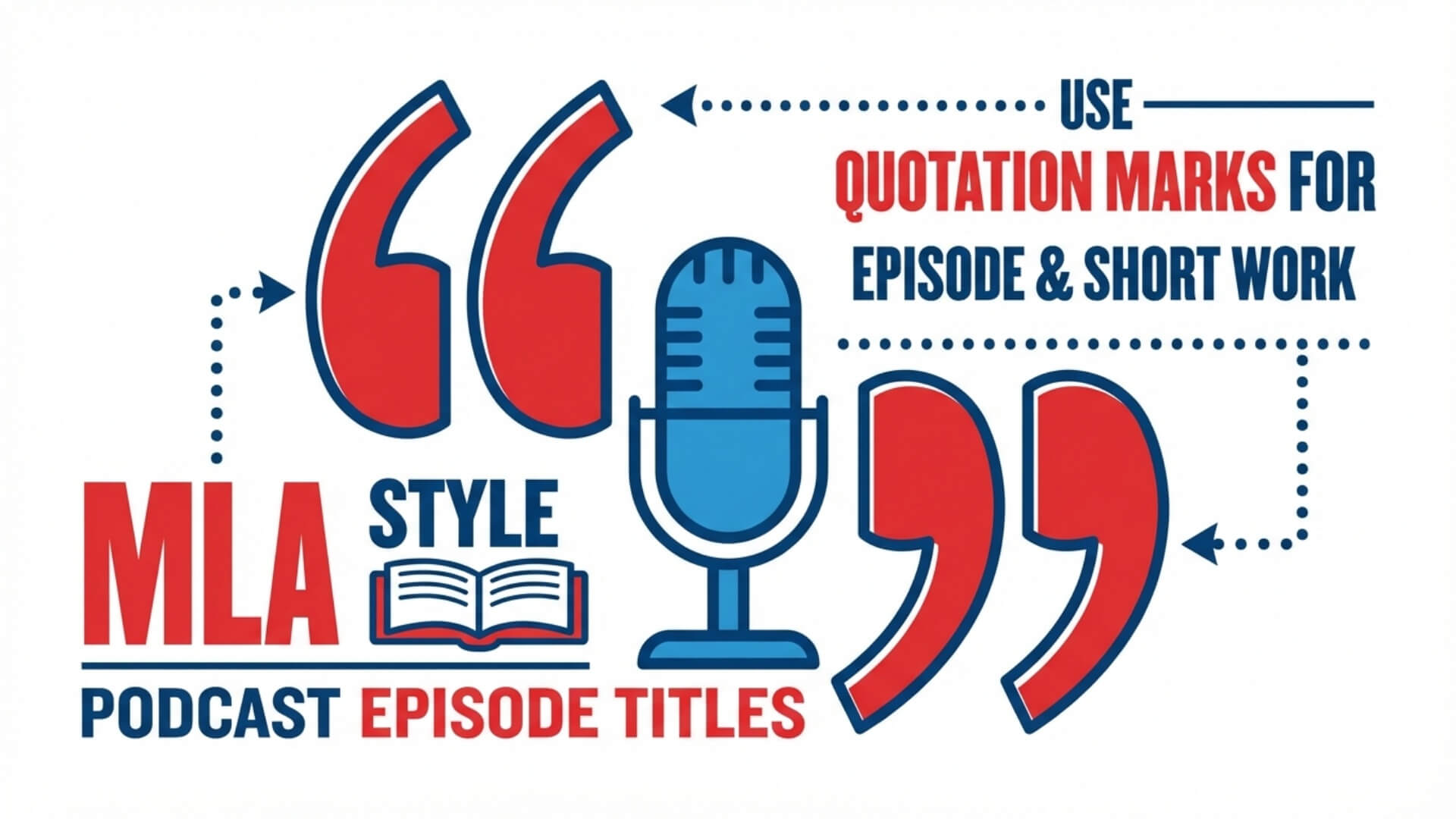
If you hang out in the liberal arts, like literature or philosophy, MLA is your best friend.
It looks similar to APA, but according to the MLA Style Center, there is one huge visual difference you need to remember.
The Golden Rule: Put the "Episode Title" in quotation marks. Keep the Podcast Name in italics.
Formatting the Reference List
In MLA, you write the episode title first. You also explicitly write out "hosted by" before the name.
The Formula:
"Episode Title." Podcast Name, hosted by First Last Name, Publisher, Day Month Year, URL.
The Example:
"The Giant Pool of Money." This American Life, hosted by Ira Glass, WBEZ Chicago, 9 May 2008, https://...
Formatting the In-Text Citation
When you mention the podcast inside a paragraph, you keep it very brief. You don't need the year. You just need the host's last name and the timestamp where the quote ends.
The Formula:
(Host Last Name Timestamp)
The Example:
The housing crisis was surprising to many experts (Glass 00:15:23).
Okay, we’ve covered the two most common styles. But if you are writing about history (or sometimes business), you might need footnotes. Let's look at Chicago style.
How to Cite a Podcast in Chicago Style
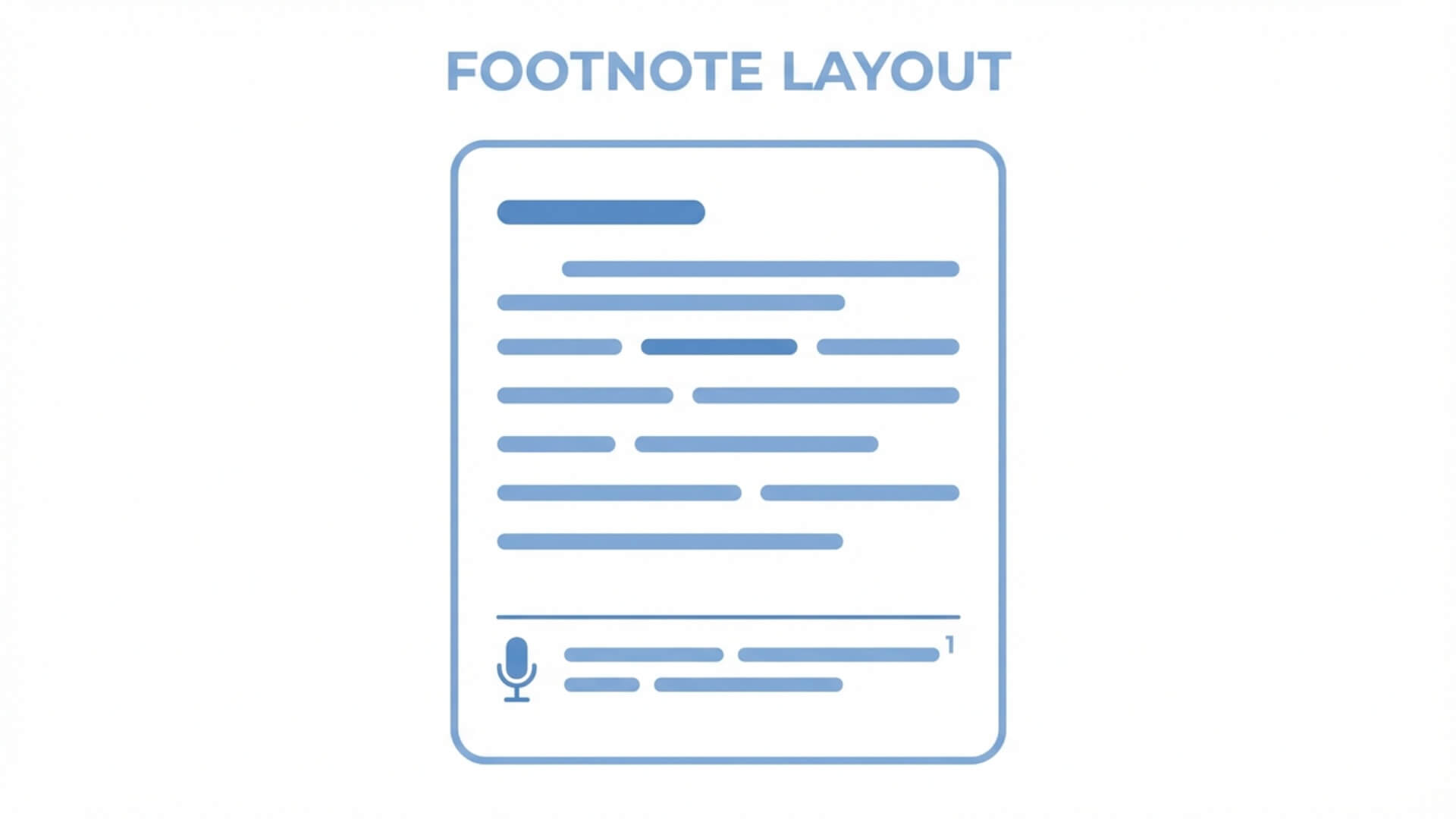
History buffs, this one is for you. Chicago style is famous for using footnotes(those little numbers at the bottom of the page) rather than cluttering up the main text.
There are two parts to this: the footnote itself (the "Note") and the final list at the end (the "Bibliography").
Note/Footnote Style
When you write a sentence and add a footnote number, you put the full details at the bottom of the page.
The Formula:
Host First Last Name, “Episode Title,” Date Published, in Podcast Title, produced by Publisher, podcast, file format, Length, URL.
The Example:
- Michael Barbaro, "The War in Ukraine," March 8, 2022, in The Daily, produced by The New York Times, podcast, mp3, 24:15, https://...
Bibliography Style
This is the master list at the end of your paper. The format is almost the same, but you flip the host's name (Last, First) and use periods instead of commas to separate the sections.
The Formula:
Host Last Name, First Name. “Episode Title.” Produced by Publisher. Podcast Title. Date Published. Podcast, file format, Length. URL.
The Example:
Barbaro, Michael. “The War in Ukraine.” Produced by The New York Times. The Daily. March 8, 2022. Podcast, mp3, 24:15. https://...
We have one major academic heavy hitter left. If you are studying in the UK or Australia, you probably need Harvard style.
How to Cite a Podcast in Harvard Style
Harvard styling is the standard for many universities in the UK, Australia, and parts of Europe. It is similar to APA but uses specific punctuation like single quotation marks.
Reference List Format
In your references at the end of your work, you need to list the "Accessed" date. This tells the reader when you actually listened to the link, in case it changes later.
The Formula:
Host Last Name, Initial. (Year published). 'Episode title'. Podcast Title. [Podcast]. Day Month published. Available at: URL [Accessed Day Month Year].
The Example:
Rogan, J. (2020). 'Elon Musk'. The Joe Rogan Experience. [Podcast]. 7 May. Available at: http://... [Accessed 12 June 2022].
Citations Within Your Text
Harvard keeps the in-text citation very clean. You only need the author's surname and the year. If you are quoting a specific line, you can add timestamps, but often just the name and year is enough.
The Formula:
(Host Last Name, Year)
The Example:
The discussion on space travel was controversial (Rogan, 2020).
Now you have the pristine, textbook examples. But real life is messy. What happens when you can't find the host's name? Or if you listened on an app instead of a website? Let's fix those problems.
Tools That Create Citations for You
Memorizing where the commas go is painful. You have a podcast to record. You don't have time to study style guides.
The good news? You don't have to. Let technology handle the boring stuff.
Here are three free tools that do the heavy lifting:
- Citation Machine: This is perfect for quick, one-off jobs. You paste the URL, choose your style (APA, MLA, etc.), and it spits out the formatted text. Copy, paste, done.
- Zotero: If you are doing deep research for a series, use this. It’s a browser extension that saves sources with one click. It organizes everything for you automatically.
- AI Assistants: Don't forget the obvious one. You can simply paste a link into ChatGPT and say, "Format this as an APA citation." It works instantly.
A Warning: Always double-check the result. Robots are smart, but they sometimes miss a date or misspell a name. Give it a quick glance before you hit publish.
Common Tricky Situations (And How to Fix Them)
Real life rarely matches the textbook examples. You might find a show with no host, or you watched a video version and don't know if it counts as a "podcast."
Here is how to handle the mess.
1. The "Missing Host" Problem
Some podcasts don't have a single host. They might be narrated by a full cast. If you can’t find a clear name, don’t panic. Look for the Executive Producer and use their name. If that is missing too, just use the Production Company (like "NPR" or "Wondery") in the author slot.
2. App Links vs. Website Links
You probably listened on Spotify or Apple Podcasts. Do not use the share link from the app if you can avoid it. Those links often force people to download the app to listen. Instead, Google the episode title. Find the direct link from the podcast’s official website. It looks professional and works on any device.
3. Video Podcasts
Did you watch the interview on YouTube? The citation rules are almost identical, with one small tweak. inside the brackets, change [Audio Podcast] to [Video Podcast]. This tells the reader that there is a visual element they might want to see.
Now that we have covered the weird edge cases, let's tackle the specific questions that clog up my inbox.
Frequently Asked Questions (FAQs)
Do I italicize episode titles?
Almost never. In most styles (like APA and Chicago), you italicize the Podcast Show Name (the "container"), but the episode title stays plain. MLA is slightly different; it puts the episode title in "quotation marks." Just remember: The big show gets the italics, not the single episode.
How do I cite a guest instead of a host?
This is a common point of confusion. Even if the guest is a superstar, the host is technically the "author" of the media file. Keep the host's name in the citation slot. If you want to highlight the guest, write their name in your sentence or include it in the episode title field.
Can I just use the RSS feed link?
Please, no. RSS links look like raw computer code. They are ugly, long, and often fail to open in a standard web browser. Take the extra ten seconds to find the clean URL from the show's website.
We have spent a lot of time on writing citations. But as a podcaster, you spend most of your time speaking. How do you give credit without sounding like a robot? Let's look at the verbal citation.
How to Give a "Verbal Citation" (Spoken Credit)
Most citation guides assume you are writing a paper. But you are a podcaster. You speak for a living.
Nothing kills the vibe on a show faster than reading a clumsy URL out loud.
Do not say: "According to episode 45 of The Daily, published on March 8th..." You sound like a robot. Your listeners will tune out.
Instead, keep it conversational. You only need to mention two things: The Person and The Show.
Here are three simple scripts you can use today:
- The Casual Drop: "I heard this fascinating point by [Host Name] on the [Podcast Name] last week, and it really stuck with me."
- The Shoutout: "I have to give full credit to the [Podcast Name] for this idea. Go check them out."
- The Direct Quote: "As [Host Name] said on their latest episode..."
This method is smooth. It doesn't break your flow. Plus, it signals to your audience that you are well-read and connected.
Once you’ve recorded the episode, your job isn't done. You need to share it. And that brings us to the most overlooked place for citations: Social Media.
How to Credit Podcasts on Social Media
Most guides stop at APA style. But let's be real: your biggest audience is probably scrolling through Instagram, not reading academic journals.
Citing on social media isn't just about rules. It’s about networking.
If you share a clip or a quote from another podcaster, follow these three steps to turn a citation into a connection.
1. Tag the Official Account
Don't just type the name in plain text. Use the "@" symbol.
- Bad: "I loved the latest episode of Marketing School."
- Good: "I loved the latest episode of @MarketingSchool."
This sends them a notification. It acts like a digital tap on the shoulder. If they see it, they might repost it to their thousands of followers. Instant growth for you.
2. Use Specific Hashtags
Skip the generic tags like #podcast. Look at their profile. Do they have a branded tag like #DailyVee or #Hustle? Use that one. That is where their superfans hang out.
3. The "Pin" Strategy
This is a pro move. If you tag a host and they reply to your post, pin their comment to the top. This shows everyone that you are connected to the big players. It validates your content immediately.
We have covered verbal scripts, social tags, and four different academic styles. It feels like a lot of work. But you don't have to do it all by hand.
Let's look at the tools that can do the heavy lifting for you.
Conclusion
Getting your citations right is the unglamorous part of the job. It’s tedious, but it builds the kind of trust that keeps listeners coming back.
However, spending hours on research and formatting shouldn't mean you have no energy left to create. If you find yourself drowning in open tabs, PDFs, or articles that you wish were already audio episodes, you might want to take a look at AIPodify.
It’s a simple tool that lets you turn those text files, web links, or even YouTube videos into downloadable podcast audio. It’s a great way to repurpose your research or create content when you can't get behind the mic yourself.
But whether you are recording it yourself or generating it, the rule stays the same: respect your sources, give credit where it’s due, and keep building your authority.

How Long Should a Podcast Episode Be for New Creators?
You asked a simple question: "How long should my podcast be?" If you Google this, you usually get the same lazy answer: "It depends." That is incredibly annoying. So, let’s be direct. While there are no strict rules, there is a sweet spot for beginners: 20 to 40 minutes.
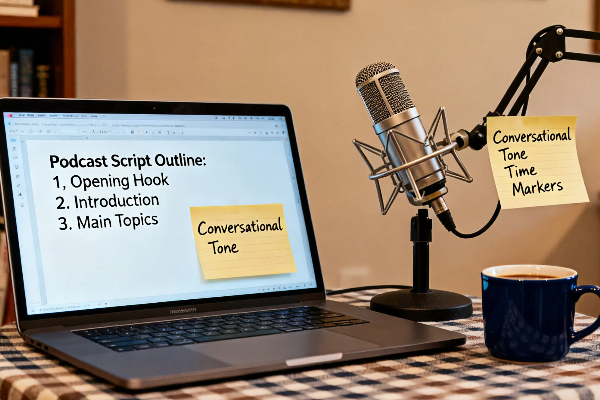
How to Write a Podcast Script: The Complete Guide with Templates
A great podcast script is your secret weapon. It's the roadmap that transforms your ideas into a structured, engaging story, ensuring every moment captivates your audience. Far from just words on a page, a script—whether a detailed manuscript or a simple outline—banishes recording anxiety and streamlines editing, letting you focus on delivering a powerful, professional show.