
33 best Podcast Directories : The Ultimate List for 2025
Love listening to podcasts? Then you've used a podcast directory.
Think of them as the heart of the podcast world. They're the central hubs that connect you to all those amazing shows.
For creators, directories are a game-changer. They take your RSS feed and spread your content far and wide. This is how new listeners find you and hit that subscribe button.
So, if you're serious about podcasting, you need to understand directories. Knowing which ones matter will supercharge your distribution and growth strategy. Let's break it down.
Podcast Directories : Your Podcast's Gateway to the World
In simple words: a podcast directory is an online platform that lists and organizes podcasts.
Listeners can use it to find and listen to shows—through search, categories, or recommendations.
Directories act as the virtual library for podcasts. They:
- Stock the shelves by pulling in your latest episodes via RSS.
- Create sections by sorting podcasts into genres and categories.
- Highlight featured picks through top charts and editor's recommendations.
- Offer a personal library card, allowing listeners to subscribe and build their own collection.
Directories act like gateways. They help your podcast get discovered.
The more visible you are in directories, the more listeners you can attract. That can even help you earn money later.
And here’s why they’re so important: most podcast apps get their content from directories.
So, if you’re starting a podcast, submitting it to major directories is a must-do step.

Podcast Platform Classification & Comparison Guide
| Category | Platform Examples | Core Function | Submission Priority | Unique Value |
|---|---|---|---|---|
| Mainstream Podcast Directories | Apple Podcasts, Spotify, Amazon Music, iHeartRadio, Deezer, Pandora, Audible, YouTube | Primary entry point and discovery hub for listeners | Required | Massive user base, brand authority, foundation for growth |
| Podcast Player Apps | Pocket Casts, Castbox, Podcast Republic, Player FM, Overcast, Castro, AntennaPod | Playback and discovery tool for dedicated listeners | Recommended | Highly engaged, quality listeners; editorial features have significant impact |
| Podcast Hosting Platforms | Podbean, Libsyn, Spreaker, AudioBoom, Blubrry, Podomatic, SoundCloud, Acast | Content storage, RSS feed generation, and distribution center | The Source | Not a directory, but the "home base" and management backend for all distribution |
| Community & Search Engines | PodChaser, Listen Notes, GoodPods, Fyyd, Podcast Index, Reddit (r/podcasts) | Enhance discoverability through community and search | As Needed | In-depth reviews, search optimization, community-driven discovery |
| Regional/Niche Directories | JioSaavn (India), Gaana (India), iVoox (Spanish), Women in Podcasting, Learn Out Loud | Precisely target specific regions or vertical audiences | Targeted | Highly relevant audience, less competition, higher conversion rates |
Mainstream Podcast Directories
These platforms are essential for any podcast distribution strategy, offering massive exposure by reaching large-scale audiences across global and regional markets. Each has unique characteristics, user bases, recommendation mechanisms, and regional influence.
1.Apple Podcasts
- Positioning: The industry pioneer and standard-setter. It comes pre-installed on all Apple devices and is central to the podcast ecosystem. Known for its clean interface and holds the highest authority among creators.
- Audience & Discovery: Reaches a broad base of Apple users. Gaining a spot in its human-editor curated features or data-driven charts (based on subscriptions and listens) is the gold standard for exposure and is crucial for new podcasts.
- Regional Influence: The dominant force globally, especially in markets with high Apple device penetration like North America, Europe, and Japan. It is a non-negotiable directory for distribution.
2.Spotify
- Positioning: A global audio giant that deeply integrates music, podcasts, and audiobooks. Its core strategy involves heavy investment in exclusive and original content, and it offers hosting via Anchor.
- Audience & Discovery: Has a notably young user base. Discovery is driven by a powerful personalized algorithm and curated playlists, facilitating passive discovery similar to its music model.
- Regional Influence: A global powerhouse with strong presence in Latin America and parts of Europe. It's as essential as Apple Podcasts, especially for podcasts targeting younger audiences.
3.Amazon Music
- Positioning: Deeply integrated into the Amazon ecosystem, it's included as a Prime membership benefit. Its biggest strength is seamless interaction with Echo smart speakers and Alexa.
- Audience & Discovery: Its primary users are Prime members and families. Recommendations blend editorial curation with personalization based on user behavior within the Prime ecosystem (like shopping and watch history).
- Regional Influence: Highly influential in Amazon's core markets (e.g., US, UK, Germany, Japan). It's a key channel for reaching the home listening segment and existing Prime subscribers.
4.iHeartRadio
- Positioning: An audio platform from a major US traditional radio broadcaster. It leverages a strong radio DNA and network of localized content, excelling at live events.
- Audience & Discovery: Primarily serves the US broadcast radio audience. It converts radio listeners into podcast fans through recommendations from its local station editors and thematic "radio" streams.
- Regional Influence: Its influence is highly concentrated in the United States. It's an important platform for podcasts focused on the US market that want to leverage broadcast media resources.
5.Deezer
- Positioning: A significant regional music streaming service that also blends podcasts with music. Its signature "Flow" mode mixes music and podcast episodes.
- Audience & Discovery: Users are concentrated in France and Brazil. Discovery relies on editorially curated podcast lists and smart insertion within the personalized "Flow" stream.
- Regional Influence: A mainstream choice in France and parts of Latin America, but has a smaller global share. It's a supplementary directory for targeting these specific regions.
6.Pandora
- Positioning: Famous for its unique Music Genome Project algorithm, which it applies to podcast recommendations via the Podcast Genome Project, offering a highly personalized radio-like experience.
- Audience & Discovery: Its user base is primarily in the US. The core discovery mechanism is a fully personalized podcast radio station, based on analyzing and matching hundreds of attributes from the audio content itself.
- Regional Influence: Almost exclusively limited to the US market. It offers great value for podcasts whose content (e.g., music, cultural interviews) is easily tagged and understood by its algorithmic system.
7.Audible
- Positioning: An Amazon-owned premium audiobook platform. Its podcast catalog carries a strong "paid audio" vibe, focusing on high-quality narrative and exclusive content.
- Audience & Discovery: Its users are audiobook lovers with high purchasing power. Recommendations are primarily based on a user's audiobook listening history and platform editorial selections.
- Regional Influence: Influential among a specific, high-value audience in its core markets (US, UK, Germany). It's a vertical platform for narrative and scripted podcasts to reach paying users.
8.YouTube
- Positioning: The world's largest video platform and second-largest search engine. It has become a critical channel for visual podcasts and audio content distribution, offering robust community interaction features.
- Audience & Discovery: Reaches the most extensive global audience. Discovery is driven by its powerful search algorithm and homepage/sidebar recommendations based on viewing behavior. Optimizing keywords and video metadata is crucial.
- Regional Influence: Holds a near-global monopoly. For podcasts wanting to maximize their reach, having a presence on YouTube (whether with a static image or full video) is now a mandatory strategy.
Mainstream podcast directories have huge audiences. It's very hard to make your show stand out. Only high-quality podcasts get more attention.
Not sure how to create great content? AIpodify generates scripts and even audio with one click. It's the helper you need for your podcasting journey.
Podcast Player Apps (with Built-in Directories)
These apps have podcast search and subscription features built directly into them, essentially acting as directories themselves. They enhance content diversity through superior user experience and unique community features. Let's break down their unique functionalities, editorial picks, user interfaces, and cross-platform compatibility.
9.Pocket Casts
- Unique Features: It's known for powerful audio enhancement tools like volume boost, silence trimming, and speed control. Its cross-platform sync is seamless, keeping your subscriptions, playback progress, and queues perfectly in sync across iOS, Android, and Web.
- Editorial Picks & Discovery: Features a "Discover" tab with lists and collections curated by its editorial team. It also aggregates popular content from other major directories.
- UI & Compatibility: Boasts a polished, intuitive Material Design interface. Its web version requires a subscription but offers a full-featured experience, making it a top choice for cross-platform users.
10.Castbox
- Unique Features: Its standout feature is a built-in community comment system that allows users to leave comments at specific timestamps. It also offers in-app recording and publishing capabilities.
- Editorial Picks & Discovery: Organizes content using a "channel" concept and offers recommendations based on popularity and algorithms. Its discovery page highlights popular episodes with timestamped comments.
- UI & Compatibility: The interface is feature-rich but can feel busy. It holds a significant advantage in Asian markets (like China, Japan, and Korea) and supports multi-language search.
11.Podcast Republic
- Unique Features: This is a powerhouse Android app packed with features. It supports highly customizable auto-download rules, podcast filters, a sleep timer, and playlist management – it's a true "Swiss Army knife" for podcast listeners.
- Editorial Picks & Discovery: It provides a "Top Podcasts" chart generated from global user subscription and listening data, helping niche podcasts gain exposure through genuine popularity.
- UI & Compatibility: The interface is utilitarian and has a steeper learning curve, but offers unparalleled control for power users. It is primarily focused on the Android platform.
12.Player.fm (previously called Breaker)
- Unique Features: It is a web-based player at its core, allowing you to listen and manage subscriptions directly in a browser without an app, with support for offline caching. Its smart podcast search is particularly powerful.
- Editorial Picks & Discovery: It curates content by creating numerous themed "channels" (playlists). It also lets users create and share their own subscription lists for a more personalized discovery experience.
- UI & Compatibility: The interface is clean and lightweight. Its cross-platform compatibility is excellent, accessible on any device with a browser, making it ideal for desktop use or as a mobile supplement.
13.Overcast
- Unique Features: Developed by Marco Arment, it's famous for its exclusive "Smart Speed" (which shortens silences without pitch distortion) and excellent Voice Boost feature for optimal vocal clarity.
- Editorial Picks & Discovery: Its recommendation system is minimalist and quality-focused. It features a single list of "Recommended Podcasts" hand-picked by Marco himself, which is highly trusted by professional podcast listeners.
- UI & Compatibility: The interface is extremely minimalistic and efficient. It is an iOS-exclusive app, offering a pure, focused listening experience for Apple users.
14.Castro
- Unique Features: Its core innovation is a unique "Inbox" queue system. New episodes arrive in the Inbox, where you can preview them before deciding to play, archive, or add them to your queue, giving you fine-grained control over your podcast flow.
- Editorial Picks & Discovery: It has a "Discover" section with editorial picks, but the app's philosophy encourages curating a smaller, high-quality subscription list rather than endless discovery.
- UI & Compatibility: It has a beautiful, queue-centric interface. The workflow is unique but highly efficient once mastered. It is also an iOS-exclusive application.
15.AntennaPod
- Unique Features: Its biggest claim is being open-source, free, and completely ad-free. It doesn't rely on a centralized directory; users can add custom sources (like Podcast Index), emphasizing user privacy and customization freedom.
- Editorial Picks & Discovery: Discovery relies on user-added sources (like the gpodder.net directory). It is inherently community-driven and decentralized, with no official editorial recommendations.
- UI & Compatibility: The interface is simple and practical. As an open-source app, it has strong community support on Android and is perfect for privacy-conscious, anti-commercial, and tech-savvy users.
Podcast Hosting Platforms
These platforms serve as the "source" for your podcast. Their primary role is to store your media files and generate your RSS feed, which is then used to distribute your show. While they are not directories themselves, many integrate distribution tools to simplify the process.
Here's a breakdown of their hosting roles, distribution tools, analytics, and how they integrate with directories.
16.Podbean
- Core Hosting Role & Features: An all-in-one platform that bundles hosting with a website builder, recording tools, and monetization features like a built-in store. It's great for individuals and beginners to get started quickly.
- Distribution & Analytics: Offers tools for one-click submission to major directories like Apple Podcasts and Spotify. Its analytics dashboard is user-friendly, and it provides robust monetization tools like dynamic ad insertion and a membership system.
- Integration with Directories: As a host, it pushes content to directories via your RSS feed. While it has a discoverable podcast page, this acts more as a showcase than a influential standalone directory.
17.Libsyn
- Core Hosting Role & Features: One of the oldest and most professional hosting companies, known for its reliability and support for high-volume uploads. It's the preferred choice for many major media companies and professional podcasters.
- Distribution & Analytics: Its "Libsyn Directories" feature allows one-click submission to dozens of top-tier and niche directories. It provides advanced IAB-certified analytics, which are highly respected in the industry.
- Integration with Directories: A pure-play host focused on efficient, error-free distribution via RSS. Its "MyLibsyn" page is for content display and does not function as a significant independent directory.
18.Spreaker
- Core Hosting Role & Features: Unique for its deep integration of live streaming and in-app recording/editing tools. This makes it ideal for podcasts that value real-time audience interaction.
- Distribution & Analytics: Manages distribution through its "Spreaker for Podcasters" dashboard, pushing content to major directories. Its analytics focus on tracking both live listener data and on-demand stats.
- Integration with Directories: The platform also includes a built-in directory within its app, where users can discover and listen to other shows hosted on Spreaker. This gives it a dual role as both a host and a limited-scope directory.
19.AudioBoom
- Core Hosting Role & Features: Positions itself towards professional creators and brands, offering professional hosting and access to a large advertising marketplace to help podcasts monetize at scale.
- Distribution & Analytics: Provides standard distribution to directories like Apple and Spotify. Its key value proposition is its powerful analytics and sophisticated dynamic ad hosting and insertion services.
- Integration with Directories: A classic hosting provider whose core value is being a content source and ad-serving hub. It integrates with external directories to maximize reach but does not operate its own influential directory.
20.Blubrry
- Core Hosting Role & Features: A long-standing host deeply integrated with the WordPress ecosystem. Its famous PowerPress plugin allows you to manage your podcast directly from a WordPress site.
- Distribution & Analytics: Offers tools for direct submission to major directories. It is renowned for its powerful, IAB-certified standalone analytics service called "Blubrry Statistics."
- Integration with Directories: While primarily a host, it does run its own "Blubrry Podcast Directory." However, this directory's traffic and influence are minimal compared to major players. Blubrry's main role remains professional hosting and analytics.
21.Podomatic
- Core Hosting Role & Features: An early pioneer in the podcast space, offering a platform that combines hosting, playback, and a basic social network, reminiscent of an early audio-blogging site.
- Distribution & Analytics: Provides basic RSS feed generation and file hosting, allowing for distribution to external directories. Its analytics and monetization tools are simpler, with a greater focus on in-platform community interaction.
- Integration with Directories: The platform itself has a strong community and directory feel. Users can browse and listen to shows directly on the Podomatic website, making it more of a social audio directory with hosting capabilities than a pure professional host.
22.Soundcloud
- Core Hosting Role & Features: A hybrid platform famous as a music and audio social network. Creators can upload any form of audio, and its core features are powerful commenting and reposting systems.
- Distribution & Analytics: Offers a "SoundCloud for Podcasters" plan that provides a dedicated RSS feed for distribution to external directories like Apple and Spotify. It provides basic analytics but heavily focuses on in-platform plays and engagement metrics.
- Integration with Directories: It is, first and foremost, a massive audio-centric social platform and player with hosting built-in. Its primary identity is a destination where users discover and consume content directly; its role as a hosting source for external directories is secondary.
Community & Search Engines
These platforms enhance podcast discoverability through social interaction, search algorithms, and user-generated content, representing an evolving trend in directory functionality. They focus on community features, search technology, data sources, and emerging trends.
23.PodChaser
- Community Features: Aims to build a credit system for podcasts, offering a detailed rating and review system. It uniquely catalogs creator and guest information, earning the nickname "IMDb for Podcasts." Users and creators can build curated lists, collectively improving the podcast database.
- Search Technology: Its search and recommendation systems rely heavily on user-generated, structured data (like tags, people, companies). This allows for granular queries, such as "find all episodes where a specific host interviewed a particular CEO."
- Data Sources: Beyond aggregating RSS feeds, it uses an open API to integrate with numerous podcast apps and hosting platforms (e.g., Pocket Casts, Transistor), syncing data bidirectionally. Its goal is to become the industry's most authoritative and accurate database.
- Emerging Trends: It's becoming a data backbone for the podcast ecosystem via its API, pushing for industry standardization. Its "verification" feature lets creators claim their work, aiming to establish a credit system based on contributions and reputation.
24.Listen Notes
- Community Features: Has minimal community focus. Its key features are utilitarian: a "Listen Later" list and keyword-based "Listen Alerts," functioning more like a personal research assistant.
- Search Technology: Its core strength is a proprietary global podcast search engine built on Elasticsearch. It supports advanced search syntax, using keywords and metadata to quickly pinpoint specific shows and episodes from a massive content library.
- Data Sources: Relies entirely on its own web crawlers that continuously index public RSS feeds from podcasts worldwide, building an independent and comprehensive database without relying on other third-party directories.
- Emerging Trends: Powers many third-party tools, newsletters, and research projects by providing a robust API for developers and businesses. It represents a tech-driven, data-as-a-service model for podcast discovery.
25.GoodPods
- Community Features: Designed like a social network, with a core focus on following friends, sharing, and recommending. It fosters a highly interactive discovery experience through friend activity feeds, personalized trend charts, and direct podcast sharing.
- Search Technology: Its search and recommendation algorithms heavily leverage the social graph and community interaction data (downloads, shares, likes), prioritizing what friends are listening to and what's trending within the community—a "birds of a feather" discovery logic.
- Data Sources: Base data comes from RSS feeds, but the "fuel" for its recommendation engine is the real-time social behavior of users within its app.
- Emerging Trends: Represents the trend towards "social discovery" and "mobile instant sharing" for podcasts. It attempts to replicate the social interaction models of Instagram or TikTok, making podcast recommendations more personal and immediate.
26.Fyyd
- Community Features: Hosts a curation community of dedicated podcast listeners and creators focused on recommendations and categorization. It offers tools like "podcast death" detection (identifying inactive shows), with the community working together to maintain directory quality.
- Search Technology: Its search focuses on retrieving results from its high-quality, human and community-verified metadata, ensuring accuracy and relevance.
- Data Sources: Based on RSS feeds, but uses its tools and community feedback to verify and enrich metadata. It is dedicated to building a "clean" podcast database for the German-speaking market.
- Emerging Trends: Exemplifies the trend of deep operation and data governance within a specific regional market (the DACH region). Instead of global coverage, it builds authority and trust in a vertical niche through community and tools.
27.Podcast Index
- Community Features: Not a consumer-facing app, but a community of developers, tech enthusiasts, and open-source advocates. They collaboratively maintain and expand this decentralized podcast directory through open-source efforts.
- Search Technology: It doesn't provide a direct search interface. Instead, it offers a completely open API, allowing any developer to build their own search technology and applications on top of its complete dataset.
- Data Sources: Aggregates any publicly available podcast RSS feed. It staunchly remains neutral and open, with its data not controlled by any single company, aiming to preserve the open nature of podcasting.
- Emerging Trends: It is at the core of the "Open Podcast movement," countering the walled gardens of big tech. It supports innovations like "Podcasting 2.0" and provides the infrastructure for the next generation of decentralized podcasting apps.
28.Reddit
- Community Features: Functions as a classic asynchronous discussion forum with a highly active community. Interaction happens through topic threads, recommendation requests, discussions, and AMAs, all characterized by high authenticity.
- Search Technology: Relies on user-generated titles and post content, combined with Reddit's native keyword search. However, the most effective method is often manual browsing and participation, leveraging the community's collective wisdom rather than algorithms.
- Data Sources: Information comes entirely from community user posts and comments—pure "crowdsourced" data reflecting the genuine, real-time interests and word-of-mouth recommendations of actual listeners.
- Emerging Trends: Serves as a perennial grassroots recommendation hub. It proves that even in the age of algorithms, genuine, non-commercial community discussion remains a powerful driver for content discovery, especially for niche and long-tail content.
Regional & Niche-Specific Directories
These directories target specific geographic regions or vertical content areas, helping podcasts reach niche but highly relevant audiences. They represent market diversity and require precise distribution strategies.

29.JioSaavn
- Regional Influence: Dominates the Indian market, backed by telecom giant Reliance Jio's massive user base.
- Content Specialization: Highly localized and diverse content covering Bollywood music, Indian pop, religious programs, and multiple regional languages.
- Cultural Adaptation: Perfectly adapted to India's multilingual, multicultural market with extensive language support.
- Distribution Strategy: Deeply integrated with Jio's mobile services and seamlessly blends podcasts with music streaming for cross-promotion.
30.Gaana
- Regional Influence: A top-tier music streaming service in India with hundreds of millions of users, particularly strong among urban youth.
- Content Specialization: Focuses on Bollywood music and entertainment-focused podcasts like celebrity interviews and film reviews.
- Cultural Adaptation: Deeply embedded in Indian youth culture and digital entertainment consumption habits.
- Distribution Strategy: Uses a freemium model with editorial recommendations, trending charts, and personalized recommendations based on listening history.
31.iVoox
- Regional Influence: The leading dedicated podcast platform in Spain and Latin America with strong brand recognition.
- Content Specialization: Exclusive focus on Spanish-language audio content across all categories including news, culture, and fiction.
- Cultural Adaptation: Connects creators and listeners across the diverse Spanish-speaking world.
- Distribution Strategy: Community-driven platform with user uploads, ratings, and editorial recommendations - essentially a "YouTube for audio" in Spanish.
32.Women in Podcasting
- Regional Influence: Global reach but most active in regions with strong feminist movements and podcast cultures like North America and Europe.
- Content Specialization: Exclusive focus on amplifying podcasts by women, non-binary creators, and women-focused topics.
- Cultural Adaptation: Embraces DEI values, providing a dedicated space for underrepresented voices.
- Distribution Strategy: Manual curation ensures quality and relevance, supplemented by social media advocacy and community partnerships.
33.Learn Out Loud
- Regional Influence: Global but strongest in English-speaking educational markets like North America and Europe.
- Content Specialization: Strictly focused on educational content including podcasts, audiobooks, lectures, and speeches.
- Cultural Adaptation: Meets global demand for informal education and self-improvement with a content-driven interface.
- Distribution Strategy: Website submission with manual review, relying on categorized browsing and editorial picks rather than complex algorithms.
FAQ
Q1: What's the difference between a podcast directory and a hosting platform?
A hosting platform is the warehouse that stores your audio files and generates your RSS feed. A directory (like Apple Podcasts) is the storefront that uses that feed to display and distribute your show. You need a host first, then submit your RSS feed to directories.
Q2: Which directories are essential to submit to?
Start with the major ones: Apple Podcasts, Spotify, and Google Podcasts. They cover the vast majority of listeners.
Q3: Are niche and regional directories worth it?
Yes. If you target a specific region or topic, these directories are essential for reaching a highly engaged, relevant audience.
Q4: What do I need before submitting my podcast?
- A finished episode audio file.
- A podcast hosting account (to get your RSS feed).
- Cover art and a show description.
Q5: How can I improve my podcast's visibility?
Use compelling cover art, a clear title, and a keyword-rich description. Encourage subscriptions and reviews, as these engagement signals influence platform algorithms.
Q6: Should I pay for placement in directories?
Generally, no. Major directories like Apple and Spotify don't accept payment for placements. Focus on creating a great show and building an audience instead.
Conclusion
Podcast directories are more than show lists. They connect your voice to the world.
A successful podcast needs two things. First, be visible in major directories. This builds a wide listener base. Second, use regional platforms wisely. They help you reach specific, valuable audiences.
With so many shows, simple descriptions aren’t enough. You need to stand out. Try AIpodify. It turns your scripts into engaging podcast content. This helps you create better shows. It also attracts more listeners.
Don’t just publish. Plan your directory strategy. Design your show with care. Submit it thoughtfully. Then watch your audience grow, everywhere.


How to Write a Compelling Podcast Script: A Step-by-Step Guide
You hit record, ready to speak your mind, and then... your mind goes blank. Or you finish recording only to find your thoughts are all over the place. These are common problems for podcasters. Among all the podcasts that have been created, approximately 50% of them stopped being updated before the release of episode 11. This indicates that many creators encounter a bottleneck in content creation that is difficult to sustain at an early stage, and the lack of a reliable script and content planning is often one of the key reasons for this phenomenon. It's a sign. Your podcast needs more than good gear and a nice voice. It needs a solid script—one that connects emotion with logic.
Step-by-Step: How to Set Up a Professional Podcast Studio
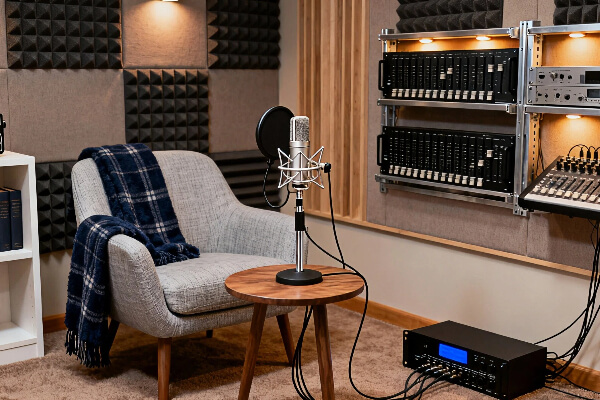
Thinking of launching a podcast? Awesome! But to stand out in a booming market, you need pro-level audio. A dedicated home studio isn't a luxury—it's your key to building audience trust and a quality show. Most beginners face three core challenges. First, gear confusion: with endless mics and interfaces, where do you even start? Second, ignoring room acoustics: even the best mic will pick up echoes in an untreated space. Finally, budget imbalance: it's tough to know where to splurge for the best sound.